I’ll be putting on my September pants again. I’m going out shortly.
It’s an odd term, I guess, and not entirely accurate. I mean, my September pants are a whole lot like my August pants … and my May, June, and July pants. They’re possibly even the same pair of pants.
It’ll be different come October, though.
OK, I’ll go ahead and tell you. I call them my September pants (or June or July pants) because of how long I wear them. When the weather is warm, I don’t often wear pants. That’s fun to say, but it’s nothing scandalous. I just prefer to wear shorts while I’m at home or running errands. When I go to meetings or events, though, I feel obligated to put on pants. Because I wear the pants for only a couple of hours, I’ll hang them up and change back into shorts when I get home. They’re not dirty—and any creases smooth out on the hanger— so I’ll wear the same pair of pants the next time I go to a meeting. I can usually go a whole month with the same pair of pants. This month, they’re my September pants.
Like most people who abandoned the office during COVID and started working at home, I have a dual wardrobe for my nine-to-five. I always wear a collared shirt. (I mean, it’s usually a fishing shirt, so it’s definitely not dressy, but it’s always collared.) This way, when I have a meeting via Zoom, I look somewhat professional. From the waist down, though, I’m super casual in my shorts. You’ve seen maybe a million memes depicting this once-comical notion, but for me, it’s no joke. I’m going to wear shorts every day of the week.
The shorts/pants question is kind of a throwback to centuries past, when shorts were worn only by males of a certain age. After a boy reached puberty, he would set his shorts aside and don pants—and there was no going back. Maybe that’s why we still admonish people to “put on your big-boy pants” when it’s time to deal with a situation in a grown-up way.
I don’t think I have Peter Pan Syndrome, and I sure don’t mean to shirk adult responsibilities. I just really like wearing shorts when it’s warm outside. They’re cooler and less constricting. I realize I’m lucky to have that type of freedom in my work situation, and by golly, I’m taking advantage of it.
Summer’s over today, though. And while warm days will continue long into October, they’ll become less regular … and then vanish altogether. Autumn breezes turn into winter winds, thermometers peak at lower and lower points, and shorts become impractical.
It’s not that big of a deal to wear pants, of course, yet I’ll miss my shorts and the summer-break feeling they inspire. Once the warmth is gone, I’ll pull on my big-boy pants—some of them lined with fleece. But hey, spring is always around the corner. And as the days heat up, I’ll be back in shorts. I’ll return to wearing long pants only as many hours as needed, and then they’ll go back on the hanger. Before you know it, I’ll be talking about my April pants.
The first time I went to the Hancock home, my new friend Don pointed a rifle at me and started firing.
Don in sixth grade, from the Midway Elementary School yearbook
Technically, he was shooting at his twin brother, Ben—and I think it was just BBs—but I was standing with Ben, so I had to take cover, too. I had only recently become friends with the twins, even though we were all from the same little town. The Hancocks were in one sixth-grade class at Midway Elementary School, and I was in the other. And until that year, I went to the Presbyterian church, and they went to Midway Christian. That’s how people in tiny towns settle into groups.
But in 1969, I started doing stuff with the CYF youth group at the Christian Church, led by a young minister, Bill McDonald. They were doing fun stuff, while everything at my family’s Presbyterian church was a bit sleepy. And let me tell you: A lot of the fun stuff centered on the Hancock twins.
In one way, they were like the Hungarian pillbugs in “A Bug’s Life.” Where the cartoon twins were tumblers, though, the real-life twins were talkers. Ben was a charmer, and Don could rationalize anything. But what the Hancocks had in common with Tuck and Roll, the pillbugs, was that they would start fighting at the drop of a hat: fisticuffs, wrestling, or even riflery.
I don’t know what set Don off when I went home with them after school that day in ’69. I think he was mad because I had sort of paired off with Ben, and in his third-wheel anger he grabbed a BB gun and started shooting. Ben and I hopped behind a wall at the bottom of the driveway. There were no cars there because neither parent was home, which made the Hancock house that much more fun.
Throughout the next decade, I spent a lot of time out at the Hancock place. Even when the parents were home, we did things I couldn’t dream of getting away with at my house. The twins had a big brother, Tilton, who hated his brothers but tolerated their friends: Billy Haynes, Jonathan Clifton, sometimes Mac McCauley, and me.
Don was a lot like the skyrockets we often launched. The boy had a short fuse on his brain’s amygdala, which led to trouble in the classroom and fights outside. Something caused that anger, but I’ll never know exactly what went on in that house of his when his friends weren’t there. When I was young, I didn’t know to ask. When I became older, I didn’t want to know.
Don, entertaining classmate Monkey McClain at Midway Elementary.
I do know that Don demanded to be noticed. When you were in the room with Don, you could count on weathering a nonstop series of pranks, pratfalls, and preposterous statements, all aimed at getting your attention. He was a relentless pest, and you seldom heard his name said aloud without “damn” in front of it and “stop” after it.
Damn, Don—stop!
While it was often hard to like Don, it was impossible to hate him. The boy was soft-hearted, inquisitive, generous, and kind. He would perform any favor you asked. And he was loyal.
“I never had to wonder if Don was going to be present for Sunday CYF meetings or other activities. Of course he would be there,” says Bill McDonald. “He was the consummate CYF member—dedicated to the group, dependable, faithful … and energetic about the concept.”
Midway Christian Church youth group, circa 1970
Don’s church involvement didn’t stop when we graduated from the youth group. We both joined the church choir. What Don lacked in musical talent, he made up for in consistency. Don never missed choir practice, and we would usually go together. He’d pick me up, we’d attend practice, and then we’d ride around and drink beer.
Riding with Don was a new act of a familiar play. Our group had long been dedicated to cruising, piling into a car with Tilton before we could drive and in one vehicle or another after Tilton departed for college. During those six or so years, we’d drive over to Versailles most nights. Midway had no stores open past five and, more important, no possibility of romance. The limited number of Midway girls our age had long since lost interest in us, so we did our cruising in Versailles. Honestly, the girls there weren’t any more interested in us, but at least there were fast food restaurants and convenience stores in the larger town.
Ben (left) and Don, 1974 yearbook, Woodford County High School
The twins were given a Chevy Vega on their sixteenth birthday, and that was our cruising car for a while. And then at some point, maybe when we were seventeen or so, Don started collecting automobiles.
I don’t mean to say he ever had a collection; it was just one car at a time. He first cajoled some money from his grandfather and purchased a used car, which he wrecked in short order. From there, he went through cars like most people go through a tube of toothpaste, getting a new one every few months.
Some cars he wrecked, some he sold, and some he swapped. He’d use insurance money, earned money, or borrowed money. Billy Haynes remembers that one car was torn apart by a pair of Frankfort policemen only a few hours after Don had acquired it. Whatever they were looking for, they failed to find. I checked with Billy and other friends and family members, and none of us can say just how many cars Don used and abused. I would guess he went through two dozen by the time he turned twenty.
The ugly Bug, parked at the McDonalds’ house. In the car (l to r) are me, Ben Hancock, and Don. Justin McDonald is pedaling the Big Wheel.
I remember only two of Don’s automobiles well, and they were at opposite extremes of the eye test. The ugliest car Don ever drove was a Volkswagen Beetle. It was already souped up (ruined, really) when he bought it. It had three sets of headlights and an orange, red, and brown paint job that established the VW Bug as the most hideous vehicle on the road. Dirty shag carpet covered nearly all of the interior, but a sunroof helped offset what was otherwise a smelly experience. I’m not sure how long Don had that car or what happened to it, but I’m sure it wasn’t stolen. People laughed out loud when he drove by.
If the Bug was the beast of Don’s automotive acquisitions, the beauty was the car I remember best: a 1972 Ford LTD convertible, white, with burgundy leather interior. I’m guessing at the year of the car and when he had it, but I think it was the summer of ’77. I was sort of between friends at that time. Our once tight group had mostly drifted apart after high school. I was home from my one year of attending college out of state (Auburn), and I had not yet started at nearby Transylvania, where, beginning that fall, I would compile a new set of friends.
A 1972 Ford LTD convertible, shown here listed for sale online. It’s similar to Don’s, except it’s intact. I’m confident Don wrecked his.
That summer, though, I rode with Don.
Being out of high school, I felt a little like John Milner in American Graffiti, the guy who should have moved on from cruising when his high school days were over. I don’t remember very much from the many nights we cruised Versailles during those months. We had a route we’d drive, stopping to talk with any girls who weren’t fast enough to run inside when they saw us coming.
I do remember that on some nights as we were leaving Versailles to drive back to Midway, we’d stop to put the top up, raising the lid on the convertible and closing the book on another night of aimless driving. Don would soon be driving a hundred miles an hour on Midway Road, so raising the roof seemed sensible.
Other nights, though, we’d keep the top down. I still remember those rides home, hurtling along the narrow road past dark pastures and corn fields, the wind buffeting my face and chilling my body, even in the middle of summer. I couldn’t hear the car engine, of course, and I couldn’t see anything outside of the headlight beams. It felt like we were flying.
That summer was the most time I’d ever spent alone with Don. I sometimes did things with the other Hancock brothers and our friends, but nobody else rode around with Don and me. Don could be erratic, as I’ve explained, but he was normal enough on our nights together. I suppose Don was doing drugs, but he didn’t do them around me. We did drink a beer or two. Or three.
Don, in the U.S. Army for a short time, was stationed in Alaska.
We also talked a good bit. Like all of us—especially at that age—Don was searching for a place in the world. He always had big dreams that were interrupted by reality … and grand plans that never got off the ground. In the years ahead, Don had a checkered work career that included a short stint in the Army. Eventually, he ended up where he started, on the family farm.
I lost touch with Don after I finished college and grad school and remained in Lexington, where I married and started a family. I never stopped being a Midway boy with hometown connections, though, and I heard a lot about Don through the years. None of it was good, as his demons and addictions took control, smothering much of the goodness in his heart.
But not all of it.
Don died in 2009, soon after he turned fifty. On the funeral home website, there were three comments on Don’s page, and one of them described his generous spirit. A fellow I don’t know wrote that whenever Don would come into some money, he would go to a little grocery near the farm and “buy beer and food for everyone in the store.”
The last time I saw Don was after I returned home to Woodford County. It was 2004(ish), and I was outside with my son Steele, who, at seven or eight years old, was riding his bike on our driveway. A small man on a big motorcycle came roaring up the driveway, and I walked out to intercept him. It was Don. I hadn’t seen him for several years. He was older, as was I, of course, but the years had weighed harder on Don.
We talked about our respective jobs and wives. Don said he didn’t have any kids, and I told him about my two sons. I did not call Steele over to meet Don. I did not invite Don into my house. I did not ask for his phone number, because I did not intend to connect with him again. And maybe Don was fine with that. Perhaps he was simply riding past my house and stopped by when he saw me outside.
But maybe he wasn’t fine with it. It’s possible that Don wanted to relive the memories of our time in youth group, talk about the friends we made at church camp, and revive the good talks we shared on the road in his white convertible.
I didn’t, though. I just … couldn’t. I feared that Don’s troubled life would bring trouble to my family, and I let him ride away with no plans for us to get together. We never talked again. He had been the most loyal friend of my youth, and I failed to return that loyalty.
It makes me sad.
I can’t stay sad when I think of Don, though, just as I couldn’t stay mad when he said or did the most irritating things imaginable. Even that first time I went to the Hancock home, we all started playing together after he, you know, stopped shooting. And I can’t be sad about the many miles our group covered together on Woodford County roads.
In my fifty years of driving, I haven’t owned as many vehicles as Don did in one year during his late teens. All the cars and pickups I’ve owned were practical and reliable. But there will always be that one flashy car—and that one fast summer—I shared with Don. And in my mind, the top will always be down … and we’ll always be flying.
Photo courtesy Nashville Convention and Visitors Corp.
They say you can never step twice into the same river: Both the river and you are continuously changing. After spending consecutive weekends in Nashville, Tennessee, I’m willing to make the same statement about stepping twice into the same city. I journeyed to Music City two times in March with my family, first for a musical theater performance and a second time for a certain type of string music: a basketball tournament.
Living in Central Kentucky, only a three-ish hour drive from Nashville, I was not unfamiliar with the place. I wrote here about a remarkable press trip I took there in 2017. My two trips this year, though, enabled me to see different sides of the city.
One of my goals was to find a hotel that could anchor my visits on both weekends. LouAnna Henton of Visit Music City introduced me to Tempo by Hilton, a new hotel perfectly positioned—about four blocks from both the Tennessee Performing Arts Center and Bridgestone Arena. It was an easy walk to both venues.
On Weekend 1, I cashed in on a Christmas present from Mary Beth: tickets to a Friday evening performance of “Hadestown” at TPAC, and we were accompanied by one of our sons, Clay; his wife Leslie; and MB’s sister, Laura. We had plenty of dining choices and opted for a restaurant specializing in Spanish tapas.
At the theater, motorcoaches were dropping off show-goers as we walked into a busy lobby, and we found our seats quickly. “Hadestown,” winner of eight Tony Awards plus a Grammy, is a remarkable, raucous musical, and I left the theater determined to fetch my high school trombone from the attic and start playing again—loudly.
The next day, before driving home, we ventured to Broadway to get a look at the bars and honky-tonks that come alive each night. We found out that nobody is waiting for nighttime in Nashville. The sidewalks were filled with pedestrians, and the street itself was loaded with day-drinking groups—bachelorettes, fraternity brothers, birthday groups, etc.—aboard all types of transportation: open-air buses, party barges, converted military vehicles, and an array of pedal taverns.
It was 11 a.m., and every bar was already belting live music through open windows. We were floored … and we were hungry, so we dove into a restaurant just off Broadway and watched the world pass by as we ate lunch, including some hot chicken. We were seeing, hearing, and tasting what Nashville is all about.
Watching the bustle of Broadway that first weekend, I told myself I should steer clear of the craziness during my second weekend in Nashville.
I did not follow my advice.
On Weekend 2, I returned to Nashville with both sons, Steele and Clay, to watch the University of Kentucky men’s basketball team compete in the Southeastern Conference tournament. I’m a lifelong fan of U.K., as are my sons. And while I had heard about Big Blue Nation at the SEC tournament, I had never attended. It’s a lot to manage, you know—meals, lodging, game tickets, and other activities.
Fortunately for me, others did all the planning. LouAnna helped me get great rates on accommodations and attractions, Clay handled ticket purchases (and the resale of non-U.K.-game tickets), and Steele found the food: excellent spots that specialized in German, Mexican, and breakfast fare, plus of course, pizza.
In 45 iterations of the SEC tournament following its renewal in 1979, Nashville has served as host 14 times, and all three Rouse men at the 2025 event agreed that Music City should be the permanent home of the tournament. It’s so easy to have fun. No matter where you park (not everybody had the luxury of walking from their hotel), you’re set for the day. With so many restaurants, stores, and bars surrounding the arena, you can happily spend the whole day on Broadway.
You can even extend your time on Broadway into the wee hours of the next day, as we did the two evenings that U.K. played. With writing an article in mind, I believed it was my journalistic duty to visit as many nightspots as I could. Only one bar doorman insisted on stamping my hand; if they all wanted to stamp me, I would have finished Thursday and Friday nights with a full sleeve.
Even though they were long nights, I behaved myself. Clay did remind, though, that after following the boys into bar after bar, with each doorman asking me to show I was over 21, I started showing my Medicare card as proof of majority.
Most bars on Broadway have several floors, often with a different band on each floor, allowing you to pick the music—and crowd intensity—you prefer. On the warm March evenings of our visit, we spent a lot of time on rooftop perches. It’s an amazing site to look down on the river of people and cars and party buses flowing down Broadway. And the rhythm on the roof was amazing. At one point, I could discern four distinct beats coming from bands’ booming speakers in nearby establishments—plus more thump-thumps pulsing from passing cars.
My taste in music is centered on Top 40 pop, especially from my younger years, though I will occasionally latch on to a current hit. I was happy to hear, while passing by the most crowded bar on Broadway, a good ol’ boy belting out “Pink Pony Club,” a song I first heard at Clay and Les’s wedding in November. Later, at another (smaller) bar, the lead singer of another band—also a good ol’ boy—asked for patrons to submit requests. When he read mine, he said “I’ll sing ‘Pink Pony Club’ … for a hunnerd dollars.”
I don’t like it that much.
We were active during the day, too. I’m a big believer in hop-on/hop-off tours, and we took a spin around town on Old Town Trolley Tours. The narrated ride gave us good insights, and while I saw many familiar sites, we hopped off at a stop new to me, the Nashville Farmers’ Market. With diverse food and drink offerings plus local makers selling their products and crafts, the indoor/outdoor market makes a great place to explore. We also hopped off in Midtown, knowing we could find excellent pizza near the Vanderbilt University campus.
What was most memorable from my weekends in Nashville was, oddly enough, a part of home. After Kentucky’s thrilling win on a buzzer-beater, Big Blue Nation flat-out roared. A sea of Kentucky fans that had engulfed the arena spilled out onto Broadway, where we were welcomed—and high-fived—by even more U.K. fans along the Broadway sidewalk and leaning out of bars. I was never more proud to wear “Kentucky” across my chest.
I will always remember that intense, shared experience of community … so many miles from home.
I don’t know if I’ll go back to Nashville for the SEC tournament; I think I got my what I needed from those crazy days and nights. Yet the city has so much to offer; I’m certain I’ll return. Nashville won’t be exactly the same, though… but neither will I.
In late October I walked through Woodford County High School during a farewell tour. The building was destined to become “the old high school” at the end of 2024, and “the new high school” would open in January.
I am fond of that old building. My dad was on the school board when the Midway and Versailles, Kentucky, high schools were consolidated; the building opened in 1964. I’m a graduate; my wife, Mary Beth, taught there for eighteen years; and our sons, Steele and Clay, are graduates, too. As a student in the building, I experienced success and humiliation, love and rejection, laughter and … more laughter. Whenever I was there as an adult—as a father and a husband—I experienced pride, always pride.
As you might guess, Woodford County High School didn’t look exactly the same in 2024 as when I graduated in 1976. The space that had been the library—my homeroom for four years—was transformed into classrooms decades ago. Renovations had similarly rendered other old haunts—Mrs. Vaughn’s classroom and the band room—recognizable, but not the same.
What did look the same were two large spaces: the cafeteria and the gym. Both of them play prominently in my memories.
I ate a school lunch in the cafeteria every single day; I never brought my lunch, and I never skipped school. That same cafeteria was also the site of every school dance: Homecoming, Christmas, Sadie Hawkins, and the prom. And with a stage at the non-cooking end, the cafeteria also served as the school theater. My acting career started and ended during my senior year, when I bluffed my way through roles in two productions on that stage.
After 1976, I never ate lunch, danced (badly), or acted (even worse) again in the cafeteria, but the gym was different, as it was prominent in my life for another forty years. During my school days, I was no athlete, but I attended many a wrestling match and a ton of basketball games. (I was a real playuh, but in the pep band.) Also, I didn’t win any awards to speak of, but I was in the gym for several honors nights through the years, and I was in the bleachers when the community celebrated the 2012 state champion baseball team, which Steele was on.
Here’s my crew, the WCHS Class of ’76, in the gym for Class Night (the warm-up act for graduation). I don’t know where I was sitting, but toward the back, I see the faces of two Midway friends, Jonathan Clifton and Bill Haynes.
I was also in the gym for a few graduation ceremonies, including my two sisters’ and my own. I remember nothing from Amy’s ceremony in 1974 and little from my own diploma grab in 1976, but I certainly recall June 5, 1972, when I was there to watch my oldest sister, Kay, graduate.
At fourteen, I was embarrassed of my family. That’s hard to understand now. My very normal parents were solid citizens and contributed to the community. Heck, Dad’s name was on a plaque at the entryway of the high school. Both of my sisters were well-liked and successful: Amy was a varsity athlete and Kay was the co-valedictorian of her graduating class. But I was an insecure teenager, and even though my family was not cringe-worthy, I cringed nonetheless.
I’m sure Mom, Dad, Amy, and I sat together during Kay’s graduation ceremony, but I only remember being beside Dad. See, I was hyperaware of my father’s clapping. He had a way of cupping his hands that made his slow, methodical claps rather loud. That was fine in a crowd, but the thing was, he clapped too long.
During the ’72 ceremony, whenever there was a round of applause for a pronouncement or introduction—and there were many—my father continued to clap after everyone else had stopped. Over and over, he performed a solo of sorts: a solitary clap (or two, even!) after the general applause had fallen silent. Although I didn’t actually see anybody scan the audience to look for the long clapper, I was sure everyone was asking the same question.
My dad, Ike Rouse: farmer, magistrate, long clapper
“Who is that person clapping an extra clap?” they had to be wondering. That person was my father, and I would be forever known as the son of the long clapper.
Each graduating senior’s name was called as they strode across a temporary stage, followed by applause … which was in turn followed by my father’s lone-wolf clap. And after the diplomas came the speeches.
Honestly, I can’t tell you anything about the speeches. I feel certain there were inspiring words from the principal or the superintendent—maybe both—and the guest speaker was a titan of local industry. I am also certain that the other co-valedictorian and the salutatorian delivered a speech. I don’t remember a single word from those addresses, though.
What I do remember is that my sister … sang.
As the class co-valedictorian, Kay tied for the highest GPA in a class of two hundredish, which is a heck of an accomplishment. It earned Kay a spot on the podium with the opportunity to address her classmates, her teachers, and the entire gathering. She could have talked about collective aspirations, shared values, or hopes for the future. She could have regaled the audience with school day memories of good old Woodford High. Instead, she sang a song.
It was a perfect song; I’ll give her that. “Friends with You” was released as a single in the fall of Kay’s senior year. John Denver—in his oh-so clear voice—sang the verses in haunting minor chords before swinging into a major key for the chorus:
Kay during her valedictory speech song, flanked by awesome, artistic Afros.
Friends, I will remember you, Think of you, pray for you. And when another day is through, I’ll still be friends with you.
Kay, too, sang with a nice, steady voice, and she had learned to play the guitar as an accompaniment. Expressing herself through a song rather than a speech must have come as a welcome relief to her classmates, her teachers, and every person in the audience.
Except her brother. I had already been red-faced for an hour or so because my father, you know, clapped his hands, and then my sister went and did something so … unconventional.
I ask you to think back to your own teenage days—to your embarrassing family—and try to imagine how I handled that situation. You’ll have to imagine it, and I will, too, because I can’t tell you how I handled it. I guess I went into a trance.
I don’t know what I was worried about, really. I bet none of my friends were there that day. And if there had been a classmate of mine in the crowd—dragged to the gym because they, too, had a graduating sibling—I feel safe in saying they did not connect the singing senior with the nerd in their eighth-grade science class (me). But still, I felt the weight of the world’s eyeballs. And they were rolling—hard. I would be starting high school myself in three months, and I was already nervous about fitting in. I’m sure my blanking out was a means of self-preservation.
I can’t tell you if Kay’s classmates were smiling, nodding, and tapping their feet. Perhaps they were even singing along. Maybe the whole crowd was singing along. Who knows? Not me.
In 2024, the WCHS gym has the school’s slogan at midcourt.
What I can tell you is that fifty-two years later, during a farewell tour of the Woodford County High School building I’d known most of my life, I found myself standing at the end of the gym floor where they used to set up chairs, a lectern, and a microphone for graduation ceremonies. I was standing, purely by chance, in about the same spot where Kay stood in front of her entire world, strummed a guitar, and sang to her friends.
I know something now I didn’t know then: If you want your message to get through, you need to step out of the box. You have to differentiate your delivery to cut through the clutter and get your point across. I’m guessing that, prior to Kay Coleman Rouse, every valedictorian in Woodford County history had made a mushy speech that blended in with the rest of the graduation jabber. Kay could have given a speech. She could have told her classmates she loves them and she’ll always remember them. But instead, she sang those words … sending her message straight into the hearts of her friends.
Convention is safe and reliable. But it’s also predictable, and words delivered in conventional ways—in stale orations—can wash right past listeners. Kay delivered words with meaning in a style all her own.
What a gutsy chick.
As I stood there in 2024, I looked up to the spot in the bleachers where I sat with my family on a June evening in 1972. Because of the memory hole that opened shortly after Kay started singing, I can’t say how the rest of her performance went. My next memory of that evening is the applause from the crowd when Kay finished. Everyone was clapping. They seemed to appreciate Kay’s music—her courage—and they clapped for a long time. And then they stopped.
Well, most of them stopped. Into the silence, my dad shot a single, final clap.
Woodford County High School, as depicted in the 2013 yearbook. The school was constructed in 1964, and every student in the ’70s was calling for a new building. Our demands were quickly met a mere 60 years later. The new WCHS opens in January 2025.
I grabbed this photo from the 1975 yearbook. That’s me with the trombone at the point of the “W” on the right. (In the mid-’70s world of the Marching Yellow Jackets, the “W” stood for “Wrong”—wrong foot, wrong note, wrong place.)
If I’m wrong, I’ll admit it. And in regard to my “grandfather name,” I was wrong. When Nora was born a couple of years ago, I said I would decide what she calls me. I would not—and I was firm—let a toddler botch my name and saddle me with an awkward, embarrassing moniker for the rest of my life. I—and I alone—knew the answer. After much deliberation, I settled on GrandBob—henceforth and forever. “Learn it, live it,” I instructed Nora the infant.
I announced this in a Facebook post, explaining my position to friends in a truly horrible rap. I didn’t say my name would be GrandBob in that farcicle post. I was going for ridiculous … and achieved it. It ended this way: And the name that she will call me Really fits me to a T. Not Gramps. Not Pappy. ’Cause my name is Heavy B (“Heavy B,” he said … His name is Heavy B Not your father’s Grandfather ’Cause he’s Heavy B instead)
Rap nightmares aside, our family agreed that my grandfather name was GrandBob. When anyone speaking to Nora referred to me, they used “GrandBob.” It was a sensible yet appealing name. I was set for life.
And then … she started talking. In her sweet, soft, little-kid voice, she began to assign meaning to her vocalisms. She expresses ideas, wants, and feelings with words that often make sense … and just as often do not. But they’re her words. And she’s her own person: a beautiful, wondrous child. When she says my name—when she instructs GrandBob and Nana where to sit or says, “Here you go, GrandBob,” it doesn’t come out as GrandBob. At 2, she simply can’t pronounce that name. But what she says is her name for me: It’s her expression of who I am. She says it in that little-kid voice—and she is firm—and I wouldn’t think of correcting her … because she isn’t wrong.
So as it turns out, I’m not GrandBob. And I was wrong to insist I was. Now I know the answer: I. Am. Jobba.
I was 22 years old and 30 days out of college. Set to start law school in eight weeks, I was pursuing my dreams of service, justice, and eventually, judicial robes. But at that moment, those dreams were giving way to another career I was imagining: lawn guy. Mowing lawns, trimming hedges, planting flowers, and tending shrubs. Hooking up irrigators and hauling off palm fronds. Pruning, clipping, raking.
I was vacationing in Naples, Florida, where I envisioned a life in lawn care.
There were four of us in Naples that July in 1980, staying in my grandmother Honeywood’s cottage, close to the beach, close to the iconic pier. College friends, we were celebrating our page-turning moment, leaving undergrad and stepping into adulthood. John was going to the sales department of a major corporation, Ben was set to be a national rep for our fraternity, and Mac had a desk at his family business. I had a seat waiting for me at the University of Kentucky Law School … and I didn’t want to go.
I did go, but I didn’t stay. I lasted all of one semester. Even though my grades were OK, I wasn’t. Looking back, I’ve long thought I was simply tired of school. After blazing through 16 years of grade school, middle school, high school, and college, I needed a break. A gap year, I guess. And it didn’t have to be a year of backpacking across Europe or digging village wells in Africa. It could have been a year of mowing Bermuda grass in Naples.
And maybe it would have been more than a year. In lieu of paying rent to Honeywood, I could have stayed there free in return for taking care of the cottage and yard. Or I could have fixed up the little guest house and lived there. But I did none of that. Instead, I enrolled—and soon disenrolled—from law school.
I’ve been to Naples many times since that final trip with my college buddies, and it’s not the same town. The area’s population has swelled from 6,000 in 1980 to around 472,000 today. I have to think that any lawn care company I opened in 1980—with a mower, a trimmer, and an assortment of clippers, ladders, loppers, and shovels in the back of a pickup—could have grown with the town. With more people and more lawns, I would have added more mowers and loppers—and employees—and amassed a fleet of pickups and trailers.
I would be the overlord of lawn care in Naples.
And if not lawn care, then some other line of work. Lots of businesses a young guy launched in 1980 Naples could have grown into an empire over the last four decades, as the quiet beach town boomed into a sun-drenched paradise for the wealthy. Start small and grow with the population. I could have painted parking lot lines or detailed golf carts or delivered live bait all over town. I could have managed the rental of Honeywood’s cottage while I lived in the guest house—or the other way around. Then I might have helped a neighbor prep his house for rent … I might have bought it myself and flipped it. And then flipped another house.
I could have made a fortune as a young man in Old Naples.
During my most recent visit—now an old man—I saw one more business I could have started in little-bitty Naples back in 1980: Bob’s Barricades. That name was on the back of an orange SLOW sign on Highway 41. Think of it: When I was 22, I could have bought a few road-construction signs and built some sawhorses, and then rented them out for one project after another. With the profits, I could buy more signs and sawhorses … maybe some smudge pots, those flaming cannon balls of road work.
Over the years, Naples added roads as fast as it added snowbirds. If my company had grown with Naples, I’d be the duke of DETOUR, the magnate of MERGE LEFT, the ruler of ROAD CLOSED. I would have been the Bob of Bob’s Barricades.
So what stopped me? What kept me, back in the summer of 1980, from letting my friends go north to their jobs while I stayed in Naples? What held me back? What was Bob’s barricade?
Oh sure, ditching law school in favor of lawn care would have raised a few eyebrows, but it wasn’t an insane idea. I could have explained to my family and friends that I was taking a non-backpack gap year, a detour, if you will, on the road to a legal career. And then I’d see how it went. I would not have lacked for company, as my Kentucky friends—and Honeywood—would have certainly visited, and I would have made new friends right there in Naples.
I could have made that bold move. I had a place to stay, a willingness to work, and an almost-developed plan. What I lacked, I guess, was guts. I feared I would take a bold step and fall flat on my face. The idea of returning home with an empty bank account and a back seat full of SLOW signs must have seemed too great of a risk.
I was afraid I’d fail.
Now, don’t get me wrong. I’ve had a wonderful life in Kentucky, marrying a fantastic woman and helping her raise two tremendous sons. I worked several jobs before settling into association management, writing magazine articles and marketing pieces for a packaged travel association. I live just outside my hometown of Midway and could not be happier.
But there is one thing—one unscratched itch. I have a novel inside me that’s been trying to get out for decades. I’ve mapped the plot, created the characters, and collected detailed information to capture the story’s 1980 setting … in Naples. It’ll be a great book, but I can’t seem to write it.
I’ve written plenty of other things and even published books of my own. I turned an annual tradition of writing Midway-based Christmas stories into a collection of short stories. I recently published a series of essays on my family’s connection to a particular house in Midway, now a famous restaurant. I even published a collection of poems I wrote during the emotionally jagged days of 2020.
But I can’t seem to write that novel. I’ve read up on writing techniques to help me tell the very best story. I’ve tweaked the plot and fine-tuned the characters, I’ve started Chapter 1 several times … and stopped every time. One minute I’m confident I can plow through the whole first draft in a month or two, and the next moment I put on the brakes, thinking I don’t yet have it exactly right. Bob’s barricade in writing a novel is pretty much the same thing that stopped me from taking a risk and remaining in South Florida forty-four years ago: fear of failure.
It’s an enhanced fear, though. See, I believe the story I’ve envisioned is possibly the best idea I’ll ever have. And if I blow it—if I write a novel that doesn’t match its potential—then I’m screwed. I will have frittered away my best idea—blown my big chance. I will have wasted my shot at writing the Great American Novel … that gets translated into thirty-five languages … and made into a movie.
That’s what halts me in my tracks: fear of epic failure.
When I was in Naples last month, I found a new barricade—a literal one. An important setting in my story, the Naples pier was wrecked by Hurricane Ian, and I couldn’t even walk out on the planked promenade like I’ve done a thousand times. Today’s stub of a pier no longer matches the murder scene of my ’80s-set story.
So I’m still tapping the breaks on my novel, and I can’t get over the hump. Maybe that’s a normal thing; I don’t know. Maybe everybody has one barricade or another, blocking them from stretching higher … from reaching a goal. Do you?
My novel isn’t ready for the junk pile. In the same way they’ll build the pier back, I can reassemble my cast of characters and reconstruct the tale they get caught up in. The pier, the people, and the Naples of my past remain very much alive in my mind. I’ve still got all the notes I took from my research on how to strengthen plot, characters, and dialogue. Plus, I’ve been thinking that instead of writing in third person, I could introduce another character who could narrate the story.
I missed my chance to hit it big as the lawn care king of Naples; hundreds of guys filled the void I didn’t dare enter. But I can still write. And there’s a laptop sitting right in front of me, waiting for me to type word after word of my story. I can still get it done. Hey, I’m only 65 years old—just 15,925 days out of college.
My watch talks to me. I bought my current watch, a Samsung something, a few years ago at the behest of Mary Beth. It isn’t as fancy as an Apple Watch, but it’s a good bit cheaper, and really, I only need it for one thing. Mary Beth said I wasn’t responding to her texts, and this watch would let me know when a text arrives. And sure enough, I get a small vibration on my wrist—and in my left, iPhone, pocket—so I am well-informed about incoming texts.
I do not take advantage of many other features of my watch, which include monitoring workouts. This is mostly because I do not take advantage of workouts. My watch does track the distance I cover on walks, though, and it records my all-important Steps. I used to allow the Samsung to monitor my sleep, but in the last few months, it started lighting up and buzzing at random times during the night, so my watch now sleeps in a separate bed.
It’s a smart watch, but not too smart. It interprets yard work as an exercise routine. For example, the watch might sense my elevated heart rate and sweat production and believe I’m swimming. When I’m push-mowing—legs moving and hands steady—my watch thinks I’m on a bicycle. Other types of yard work generate a variety of activity icons I can’t quite interpret. I might be digging weeds or hauling yard waste, and my watch displays symbols that could be canoeing or wrestling or rhythmic gymnastics. Confusion reigns in the great outdoors.
Along with the nighttime flashes, my watch has picked up another quirk. It only occurs during those mysterious workout/yard work episodes, but it’s certainly alarming, watch-wise. I’ll be shoveling mulch or scraping mucky leaves out of a gutter, and suddenly, a woman’s voice will tell me how many laps I’ve swum, or she’ll exhort me to keep pedaling.
The first time my watch talked to me, I almost fell off a ladder. She doesn’t speak up often, but it’s always startling.
The latest episode happened yesterday, when I was removing a large tree limb that had fallen in a storm a few weeks ago. The tree is one of many lining our road frontage, and the big limb had brought down others when it fell, so there was a lot of wood to cut and haul. I positioned my pickup truck close to the action, next to the eight-foot embankment leading up to our property, with my two right wheels in the ditch. That allowed me to pitch logs and branches into the truck bed as I hacked them up.
This was, I calculated, a forty-five-minute job. Right after the destructive storm, I had watched a crew of professionals dismantle much larger fallen limbs in no time at all, and my job was nothing compared to what they had tackled. The difference, of course, is that they were a team of five with a chipper, and my solo efforts were slowed by the need to stop chopping and take a truckload of branches to my branch-dumping spot.
After two hours of cutting, loading, and unloading, I was wearing down. Working on my third truckload, I was hot, tired, and depleted. Then my watch started talking.
“Pick up the pace,” she said, loudly.
Startled badly, I was certain that an actual woman was standing close by, inexplicably giving me encouragement. Seeing no one, I thought to look at my watch, and sure enough, it showed a running timer below one of those mysterious icons. There’s no telling what it thought I was doing.
I chuckled to myself and kept going. I had cleared away the smaller branches and was left with only thick lengths of limb. It was nearly noon by then, and the cool morning had turned hot. The larger limbs were heavier, of course, and I pitched them into the truck bed with hopes of mashing down the gnarly-snarly branches so that this could be my final load.
“Go just a little faster,” my watch said.
“Eat bark,” I replied. I fantasized about taking the chainsaw to my Chatty Cathy timepiece.
Mustering the strength for another heave, I watched as a big log hit the branches in the bed and bounced off, falling behind the truck. Thinking it might be extending into the road I was already half blocking, I clambered down the embankment and picked up the stray log. I squatted and hoisted, lifting with my legs and not my back.
“Go just a little faster,” my watch repeated.
Just as I was about to unleash a stream of cuss words at the lady living in my watch, an actual lady appeared.
“Hello,” she said, walking past my truck, the log, and me.
“Hello,” I responded cleverly.
The woman was wearing running shorts, running shoes, and a tank. She must have run out of steam on the hill and slowed her run to a walk to get to the crest. I don’t know how many miles she had run, but she looked way fresher than I did, and I’d been stomping around for the last two hours in one place.
Determined to finish my task, I climbed back up the embankment and grabbed another log to load. Using a two-handed lift and push, I aimed for the middle of the truck bed, only to see the log roll off the far side. Once again, I scuttled down the embankment, hurrying to retrieve the log before a car came. I grabbed it and stepped to the back of the truck to heave it into the bed. I pushed the log up and over, and as I turned to go back up the embankment, I saw the woman, now in a downhill trot.
Too exhausted to speak, I reached up to touch the brim of my hat in a sweaty but courteous salutation. She smiled and spoke briefly as she rushed by.
I was totally spent and half delusional, but I’m pretty sure I heard what the lady said as she sped by. And her voice sounded all-too familiar.
Stephens Street, one of the longest avenues in Midway, Kentucky, was originally spelled Stephen’s Street—belonging to Stephen. It was named for Stephen A. Douglas, the Illinois politician who famously tangled with Abraham Lincoln in a series of debates when the two men vied for a U.S. Senate seat in 1858.
That’s what Grampa Floyd told me. And he had more details about Mr. Douglas.
“Stephen A. was in cahoots with Henry Clay. Those fellers worked up the Compromise of 1850,” Grampa Floyd told me. “Henry Clay lived in Lexington, but the two of ’em took the train to Midway so as to avoid being seen together. Tempers were running high in those days—slavery was a hot topic.”
But that wasn’t the only time Douglas was in Midway, according to Grampa Floyd. He told me that Lincoln himself also came to Midway. Abe’s wife was from Lexington—her father and Henry Clay were friends—and there was one time, when Lincoln and Douglas were both in Kentucky, they agreed to hold another debate … in Midway.
Grampa Floyd wasn’t clear on the date, but he was certain the two famous statesmen arrived in Midway by rail and met at the home of L.L. Pinkerton, a house on the corner of current-day Stephens and Winter streets.
“Little known fact,” Grampa Floyd said to me, “What we call Winter Street today was named Lincoln Street, so that Midway’s two main streets were named after the two debaters, see, and the two streets crossed where the two men met.”
In telling the story, an energized Grampa Floyd had raised up in his bed—almost to a sitting position when he got to the part I just told you—and then he collapsed back onto his pillow, exhausted by the memory.
“Not everybody in Midway liked Lincoln, you understand. Some of ’em thought the government shouldn’t be saying who could or couldn’t own slaves,” Grampa said, whispering with exhaustion. “Enough of ’em were on the city council, and they made the city change the name of Lincoln Street. “
“How’d they come up with Winter Street, then?” I asked.
“It was January,” Grampa Floyd said. Then he fell asleep.
I stood there in Grampa’s bedroom, looking at a man I barely knew. I had been in Midway only a few hours and already had serious doubts about coming, especially so close to Christmas. I had heard from a cousin that Grampa was doing poorly and living alone, so I drove up from my home in Cleveland, Tennessee, to see if I could help.
Why now—after all these years? And why leave my family three days before Christmas? I wasn’t sure.
I hadn’t seen my grandfather since I was a kid—maybe forty years ago. My family—Mom, Dad, Eloise, and me—had stopped by Midway on our way to vacation in Michigan, coming up from Chattanooga. It was early June in Kentucky, and already it felt like hot August.
Grampa Floyd was glad to see us that day, I think. Surprised, for sure. I don’t think my mother had kept in touch very well through the years … I guess not at all, really. And she hadn’t told him we were going to visit. Maybe she even was hoping he’d be away from home when we drove into town.
I honestly don’t know what Mom’s deal was with her dad and stepmom. Sometimes family secrets involve mistresses or shady dealings, and sometimes they’re darker things. I always had a feeling a dark truth laid at the bottom of Mom’s growing up days in Midway, and she hardly ever talked about it—like never.
Grampa Floyd’s wife, my mom’s stepmother, had died a few years before that June day we were in Midway. Maybe her passing cleared the air enough for Mom to visit, but it sure wasn’t a warm and huggy reunion. We stood at the door for a full two minutes—with Mom explaining to Grampa Floyd why we dropped in on him—before he finally thought to invite us in.
The day was sunshiny, but Grampa’s house was mighty dark inside. The TV was on, and there was a lot of stuff in that front room. Grampa Floyd had to clear off the couch and two chairs for us to sit down, removing piles of books, mail, laundry, and dishes.
It was a really awkward hour or so we spent there in Grampa’s house. He was polite and asked Mom and dad about work, and me and Eloise about school. He told us about his life in Midway: He was still a few years away from retiring from Midway College, he went to church at least twice a year, and he ate at The Depot restaurant at least once a week.
That was in 1980, and I didn’t see him again until this week. I was thirteen then, now I’m fifty-five, just a year or two younger than Grampa Floyd was when we stopped by all that time ago. I know that sounds awful, me not seeing him for so long.
Families can take weird turns, but time can bend an even odder path.
In the years after that trip to Michigan, Mom would call Grampa Floyd on his birthday—July seventh, if I remember right—and usually on Christmas Eve. She sent him announcements and pictures when Eloise and I graduated, and newspaper clippings about my minor sports accomplishments and Eloise’s big scholarship to Georgia Tech. And she sent him a copy of Dad’s obituary. But he never visited us in Chattanooga, and we never passed through Midway again.
Cousin Myrna did, though—a couple of weeks ago—and she called me when she got home to say that Grampa Floyd was in his final days, and it sure would be nice if somebody from the family could be there to help him out.
I wasn’t eager to go. As I have told you, the man was a virtual stranger, and the prospect of sleeping on Grampa’s couch and taking care of him and his who-knows-what bodily functions led me to give Myrna a firm “maybe.”
But hell, I was taking time off during the holidays, anyway, and Beverly gave me the green light. Our two daughters were home from college, and Bev said the three of them would do some Christmas shopping and decorating while I was away. So I drove to Midway.
And let me tell you: It wasn’t like Grampa Floyd welcomed me with open arms.
At first, he complained about nobody in our family coming to visit him. He told me he’d had two heart transplants, brain stem surgery, and an exorcism, and “not one dang time” did any of us have the courtesy to visit or call—or even send a card.
I couldn’t argue with him about my family’s lack of attention, and even if he was as much at fault as we were, I didn’t want to get snippy with a dying man. Besides, I was momentarily stunned by the number and severity of physical ailments he had overcome. It sounds silly to say I believed him about all that, but I had basically just met the man. I didn’t know he was prone to exaggeration.
Like, super-prone.
After Grampa Floyd woke back up and I convinced him that it made sense for me to stay with him for a few days, I offered to get us some lunch. He told me about a place called Wallace Station that had good sandwiches. I used my phone to find the menu, and Grandpa told me he wanted a catfish sandwich.
“They named that restaurant after me, you know,” Grampa said as I was heading out the front door, which he could see from his bedroom. His house was pretty small.
I paused, thinking about his name: Floyd McCarthy. Was his middle name Wallace? I didn’t even know.
“Is your middle name Wallace?” I asked.
“No, it’s Gash,” he said. “I’m related to the Gashes over in Anderson County.” He picked up a magazine from a stack on the table by his bed and flipped the pages slowly.
You know, when somebody you know pretty well says something odd, you can call bullshit on ’em. But when it’s somebody you don’t really know—and you’re still in the extra-polite phase—it’s more of a challenge.
“I’m not sure I follow you, Grampa Floyd,” I said, with one hand still on the doorknob.
“They was gonna call it Gash Station, but they figured it would confuse people passing through town and looking for a fill-up,” he said, not looking up from the magazine. “I heard they just picked ‘Wallace’ out of the phone book.”
“Oh,” I said. “That’s pretty neat. I’ll be back soon.”
If this conversation had taken place a few hours later—after I knew more about Grampa Floyd’s adventures with truth—I would have been more circumspect during my visit to Wallace Station. As it was, though, after I ordered sandwiches from a teenager at the cash register, I introduced myself as the grandson of Floyd McCarthy, the man who was almost the namesake of the place.
The kid looked at a girl beside him who was boxing up another to-go order; she had stopped boxing when I shared why Grampa’s middle name was rejected.
The boy spoke slowly. “It’s called Wallace Station because this area was called Wallace and this building was the train station.”
“Oh,” I said. “Well, maybe my grandfather got mixed up. He’s pretty old, you know.”
The boy just nodded. The girl went back to boxing.
I heard a chair scoot behind me, and an old man ambled over to me. Not as old as Grampa Floyd, but older than me.
“I’m Avery Jackson,” he said, grabbing my hand to shake it. “Did I hear you say you’re Whopper’s grandson?”
Here I was again, fielding a screwy comment from a stranger. “I’m Jay Bellows. My grandfather is Floyd McCarthy,” I said.
“Yeah, I know Floyd,” Mr. Jackson said. “Known him all my life. We call him Whopper. It’s not because he’s a fan of Burger King, either. It’s because of the tall tales he tells. Some of ’em sure are whoppers. Most of ’em, really.”
I told Mr. Jackson it was good to meet him, and I grabbed the bag of food and headed out the door. I sat in my truck for a minute, embarrassed for repeating Grampa’s version of Wallace Station history and thinking about what Avery Jackson said. When I got back to my grandfather’s modest house on Stephens Street, I chose not to bring up my conversation with the restaurant staff or with Avery.
Grampa nibbled at his catfish and asked me to save the rest for later. I re-wrapped most of his sandwich and half of mine—country ham and pimiento cheese—and asked him if he needed anything else. He told me he wouldn’t mind having a chocolate milkshake from the drugstore.
“Is it on that street beside the railroad track?” I asked. When I had first driven into town off the interstate, I had seen a string of shops and restaurants lining the two one-way streets on both sides of the track.
“It’s in the middle of the street that runs on the high side of the tracks,” Grampa said. “It’s funny about that street. Some people were calling it Main Street and others called it Railroad Street, so years ago the city council decided it would be Main Street on Monday, Wednesday, and Friday, and Railroad Street on Tuesday, Thursday, and over the weekend. What day is today?”
“It’s Thursday, Grampa Floyd.”
“All right then, the drug store is in the middle of Railroad Street.”
I laughed a little. “I don’t take the time to shop much at home, but I’ll do some shopping while I’m downtown. Christmas is in three days, Grampa. What can I get you?”
I was mostly joking, but Grampa looked out the window and got a little teary eyed. I guess he knew he wasn’t in great shape, health-wise.
“I’d sure like to hear the Christmas bells in Midway one more time before I’m gone,” he said softly. “Lordy, how I love those bells.”
His wistful wish made my breath catch a little. I was about to ask Grampa about the bells—who sold them or played them or what were they—but he rolled over and turned his back to me.
I quietly left the little house on Stephens Street and headed toward Railroad Street on foot. I called home and talked to Beverly while I walked. I told her it was a good thing I had driven up to Kentucky; Grampa Floyd was pretty frail and all alone. We talked about whether I should drive home for Christmas and maybe come back, but when I told Bev how weak Grampa seemed, she said maybe I should just stay in Midway as long as it took.
The one name on a building I had spotted on Railroad/Main Street as I drove into town was the Midway Museum, and now I figured that would be a good place to learn a little more about the naming of Stephens Street.
I remembered enough U.S. history to know that a Lincoln–Douglas debate in Midway was unlikely. But because Abraham Lincoln was born in Kentucky and married a Kentucky woman, I figured part of Grampa’s story might be true. Surely the appearance of Abraham Lincoln alone—much less in a renewal of the most famous debates in American history—would be the centerpiece of the Midway Museum.
The museum’s big room offered a number of interesting exhibits, memorabilia, and photos, but there was no mention of the sixteenth president nor of a debate. I wanted to make sure, though.
“Did Abraham Lincoln ever visit Midway?” I asked the museum docent, whose name tag identified her as Velma Adams.
She thought for a moment. “Well, we know that Mr. Lincoln passed through Midway on a train more than once, and it’s thought he and his wife, Mary, spent some time just west of here at the summer estate of Mary’s father.”
So maybe Lincoln was in Midway. And maybe Grampa’s story was true! I prodded Velma for more.
“Are you aware of a debate that took place here in Midway? Between Lincoln and Stephen A. Douglas?”
A look of doubtful concern flickered across Velma’s face. “No, I’ve never heard anything about a Lincoln–Douglas debate in Midway,” she said carefully. “I believe they were up in Illinois.”
“And Stephens Street isn’t named after Stephen Douglas?” I asked, trying to show I didn’t believe it myself.
“No, the first streets were named after officers of the railroad company that founded Midway,” Velma said. After the silence that followed, she added, “You might see if you can get on the Midway History page on Facebook. I get a lot of my information there.”
I thanked Velma and spent a little more time in the museum. They pack a lot of information into a little space, but the main reason I stayed is because I was trying to be nonchalant after asking what must have been the dumbest question Velma had ever fielded.
I left the museum and figured I’d explore more of Midway. Railroad Street had a lot of shops, and because I had not done any Christmas shopping, I stopped in at one named Cozies. It was indeed a cozy place. Shelves in the store were loaded with candles, picture frames, funny phrases spelled out in wooden letters, pillows, wine glasses, bookends, and clocks. There were separate displays for pet items (collars and clothes), bar ware, and lots of stuff made from wool. Further back was room with a sign above the door that said Jessie’s Jewelry.
A woman of about forty put down a book she’d been reading, told me her name was Jessie, and asked if she could help me find anything. I told her I’d like to buy some Christmas presents.
“I have two daughters, nineteen and twenty-one, and a wife who’s fifty-something,” I said. “I’m sure they’d like your jewelry. If you could pick out three pieces and wrap them up, I’d be a happy man.”
Jessie took me into the jewelry room and asked me questions I wasn’t sure how to answer, like whether the women in my life wear silver or gold, and do they like dangly earrings and chunky necklaces or not. I said “silver, yes, and not sure,” but I wasn’t sure about any of it.
After she had selected three pieces that I was OK with—and they were the first three pieces she showed me—Jessie wrapped them in gold paper and tied them with red string. While she wrapped, she made small talk.
“Are you visiting Midway for the first time?”
“Well, I was here many years ago, and I came back to check in on my grandfather, Floyd McCarthy.”
“Oh,” Jessie said with a sympathetic look. “I heard he was feeling poorly. How is Whopper?”
I had to chuckle inside about the pervasive use of Grampa’s nickname, and I told Jessie that he was doing as well as could be expected. I remembered then about the bells.
“Say, do you know anything about Christmas bells in Midway?”
“I have these cute bells here,” Jessie said, walking across to a table holding several white service bells with “Beach, please!” painted on them. She dinged the top of one.
“No, I think he means bells that are played at Christmas—maybe in a church tower or a performance,” I said, smiling about the beach bell.
“Who’s ‘he’? Whopper?”
“Yeah, my grandfather.”
“Oh Lord, if Whopper told a story about Christmas bells, it’d be that the Drifters recorded ‘The Bells of St. Mary’s’ in the Midway United Methodist Church or something,” Jessie said, laughing.
“No offense,” she added.
“I think I know what you mean,” I said. “But you don’t know any local traditions that involve bells at Christmas?”
Jessie thought for a minute.
“Well, one of the churches had a hand bell choir there for a while. Maybe they played at Christmastime,” She said. “And the Christian Church plays Christmas carols from its bell tower, but they play hymns all year round.”
“Yeah, maybe it’s the hand bells,” I said. “Grampa seemed pretty serious about it. I’ll keep asking around.”
After gathering up my newly wrapped gifts, I got directions to the drug store from Jessie and left, thanking her on my way out.
Her simple directions were accurate—four doors down—and when I settled onto a stool at an old fashioned soda fountain, a fella came from the back of the store and took my order. We talked while he made the milkshake, and I was surprised to learn that my soda jerk, Stan, is also the town’s only pharmacist.
“How long have you lived here, Stan?”
“Oh, I guess it’s fifteen years now,” he said as he looked for the whipped cream.
“Do you know anything about Christmas bells in Midway?”
Stan paused and thought. “I heard about a group of college girls that sang—must’ve been years ago. They called themselves the Midway Belles,” he said. “I imagine they went home every year for Christmas break, though. Why do you ask?”
As soon as I told him who I was—or, to be exact—who my grandfather was, I got the Whopper reaction that had come to be familiar. Stan told me a story.
“One time, a couple from Indiana was in here and asked about the train schedule. And Whopper—sitting right there on that stool you’re on—told them that a train bearing John F. Kennedy’s body had passed through Midway in 1963. ‘Real slow,’ Whopper told them.”
I thought for a second. “President Kennedy didn’t have a funeral train.”
“That’s what the guy from Indiana said!” Stan replied, animated at the memory. “And you know what your grandfather said? Whopper said, ‘Well, maybe it was Abraham Lincoln’s funeral train I’m thinking of.’ Like he was here for it!”
Stan was laughing so hard he almost dropped the milkshake. As I rescued it from his hand I said, “Yeah, Grampa has lots to say about President Lincoln.”
Grampa Floyd was awake when I got back to his house, but he took only a few sips of the milkshake and said he’d had enough. I asked if he had been seen by a doctor recently. Grampa said that Dr. Rorschach had been by to see him only yesterday, adding with his pride that it was his personal physician who had invented the inkblot test. Then he drifted asleep again.
While Grampa slept, I poked around his phone in the kitchen, looking to see if he kept a list of frequently called people. Sure enough, I found a short list that included the drug store, the Corner Grocery … and a Dr. Rorchester. That had to be him—or her—I thought.
I went outside and called the doctor’s office from my truck and was surprised when the receptionist put Dr. Rorchester on the phone right away. We talked for only a few minutes, and he confirmed—very sympathetically—that Grampa Floyd was indeed in his last days, and how wonderful it was that I had come to town to help Grampa in his final journey. As we were wrapping up, I had to ask the doctor if he knew about any Christmas bells.
“It’s funny you should ask,” he said. “The last time I dropped in on Floyd, he mentioned how much he’d like to hear the Christmas bells one more time. I asked him what bells he was talking about, but he only shook his head and smiled.”
For lunch the next day, I returned to Wallace Station. Grampa wasn’t eating much of anything—which Dr. Rorchester had predicted—but I was sure hungry. I had eaten the other half of my first sandwich for supper, and for breakfast I had drunk most of Grampa Floyd’s milkshake.
The same boy was taking orders at the cash register, and he eyed me warily as I approached. I thought he might be bracing himself for another ridiculous pronouncement, but instead, he had a statement of his own.
“It’s a good thing you came when you did. We’re closing at noon today because of the blizzard.”
“Blizzard?” As soon as I said it, I realized I hadn’t watched any local news or checked the weather since I had arrived. The boy said a heavy snowfall was predicted, and after I ordered my sandwich, I stood lost in thought, wondering if I would be able to drive home for Christmas, now two days away.
“You mean Whopper didn’t tell you about the winter of ’63?” I recognized the voice and turned to once again see Avery Jackson. “We had some deep drifts on Christmas Day that year, and I’m surprised he didn’t tell you that he turned into Midway’s Santa Claus.”
“No he didn’t mention it, Mr. Jackson,” I said. “To be honest, Grampa Floyd isn’t doing too well. He hasn’t been up to watching TV, and we didn’t know anything about this blizzard that’s coming.”
Mr. Jackson’s smile vanished. “Well, I’m sorry to hear that, son. Whop—I mean Floyd … really stepped up that year. The roads were covered with deep snow, and the two of us delivered meals to a lot of people who couldn’t spend Christmas with their families. Floyd even gathered up some toys, we took them to homes where they weren’t expecting much Christmas even before the storm hit,” he said. “It was his finest hour.”
“I appreciate your telling me that,” I said. “Say, Mr. Jackson, do you know anything about Christmas bells in Midway? Grampa has been talking about them, and I’ve been trying to track them down. It’s been sort of like his last wish.”
Mt. Jackson paused, then shook his head. “There’s always bells at Christmastime. Maybe Floyd will hear his ring.”
I left Wallace Station with a big sandwich and a heavy heart. I didn’t mind going to the Corner Grocery and stocking up on a few things in anticipation of the blizzard. And I was fine to stay with Grampa Floyd, even if it meant I’d be late getting home for Christmas with my own family. But Grampa Floyd was family, too, and I was sad that it had taken me so long to connect with him. I knew he’d never see another Christmas.
You can bet I turned the news on when I got back to Grampa’s house. His heating system did a good job of keeping his small house warm, but I brought in several armloads of firewood from the shed in case the power went out and we needed to use the fireplace.
The curly haired weather lady on Channel 18 was calling for fourteen to eighteen inches of snow, starting at sunset and lasting until noon the next day, Christmas Eve.
I told Grampa Floyd I’d met Avery Jackson and he had told me about a big snowstorm in 1963. Grampa pulled his covers up to his chin; it seemed like he was chilled at the memory. Then he spoke in a voice just above a whisper.
“That was some snow. Me and Avery were hauling people and presents and Christmas dinners all around town,” Grampa said. “Avery did the driving. It was his finest hour.”
I wanted to ask Grampa how they managed to drive in such deep snow. I didn’t know if four-wheel drive vehicles were around in 1963. But he had fallen asleep.
I called Dr. Rorchester again, not bothering to get out of earshot from Grampa, and I told him Grampa Floyd was growing weaker. I asked if I should take him to the hospital, and the doctor said if Grampa wasn’t in pain, it was probably better for him to stay in his own bed. He thanked me for staying by Grampa’s side.
I made another call, to Bev and the girls. They knew about the snowstorm bearing down on Central Kentucky, and they told me they were likely to get a couple of inches in Tennessee. I apologized for missing Christmas, but Bev said we would celebrate whenever I got back.
I was sad to be away from home, but I knew I was doing the right thing.
Within a couple of hours, the wind started howling. There was a streetlight in front of Grampa’s house, and at first, I could see the snow in its glow, racing in a nearly horizontal line … until the snowfall was too thick to see exactly where the streetlight was. Bundled up on a couch with a well-worn comforter, I slept off and on through the night, waking whenever a cold gust of wind rattled the front door especially loud.
Around seven or so, I got up from the couch with the comforter wrapped around me like a half-swaddled baby. The storm was over and the house was quiet and still warm, as we had not lost power. I checked on Grampa; his breathing was slow, with alarming pauses at the end of each exhalation. I tiptoed around his house, making sure every window and wall had survived the blizzard.
The sun wasn’t up yet, but the snow had stopped; the streetlight once again shown brightly, illuminating Midway’s own new comforter: a puffy white blanket of snow. The curly haired weather lady had been right: There looked to be about a foot and a half of snow.
I put Grampa’s old Mr. Coffee to work, and I turned on the TV—with the sound down low— to catch the local news. The same crew was still working the Channel 18 newsroom. A young reporter said it was safer for them to stay at the station, and for the morning crew to stay home. He said one lane had been cleared on the interstate, and with temperatures expected to warm into the upper 30s and remain above freezing in the night ahead, Santa Claus would be able to make his rounds.
As I was thinking about my wife and daughters, I heard Grampa start to stir. I set my coffee down, went to his bed, and asked if I could get him anything.
“I might take a drink of water. I’ve got a straw on that table, I think,” he said quietly. “I slept all night but I feel so tired today.”
After I handed Grampa a cup of water with his straw, I described last night’s storm and today’s snow-covered scene.
“Is it Christmas?” he asked.
“No, it’s Christmas Eve,” I told him. “They said on the news that it’ll warm up a bit, and Santa should be able to land on all the rooftops tonight.”
“I think I’ll be hearing those Christmas bells, son,” Grampa whispered. I was coming to understand the bells meant death, and as sad as that made me, I felt my face flush with another emotion. He called me son.
Grampa raised up on one elbow and moved as though he intended to get out of bed, but he laid back onto his pillows, exhausted by the effort.
“Jay, do you reckon you could get me to the front room? I want to look out the window,” he said softly.
I told him I could try, and I gathered up a blanket off his bed and threw it over my shoulder. Then I eased the bed coverings back and slid one arm behind Grampa’s shoulders and the other under his knees. I lifted him with surprising ease. I had a dog back home that weighed about the same as Grampa Floyd.
I figured Grampa just wanted to see how deep the snow was, and when I got to his big window in the front room, I hooked my foot around the leg of an upholstered chair and swung it around to face the window. I set Grampa in the chair as gently as I could, covered him with the blanket, and gathered a few pillows from the couch I had slept on. I had Grampa propped up and covered up pretty well, and I asked if there was anything he needed.
“Naw, I don’t need anything. But if you could open the curtains, I could see out the window better.”
“It’s pretty, isn’t it?” I asked after I had given him a better look outside. “And quiet. I don’t see any car tracks or footprints, except where a rabbit went across your yard.”
“The sun’s almost up,” he said. “I expect we’ll hear the bells soon.”
Oh Lord. I knew Grampa was ready to die, but I didn’t know if I was ready to watch him fade away. While he gazed outside, the daylight growing brighter, I covered my eyes and tried to calm my nerves.
And then I heard it.
At first, I thought it was Grampa’s wheezy lungs, maybe even a death rattle. But as I kept my eyes covered and concentrated, I could hear the sound more distinctly.
I heard Christmas bells.
I opened my eyes to bright light, the early sun splashing onto the brilliant white snow. I couldn’t tell where the bells were coming from, but Grampa seemed to know. He leaned forward and craned his neck to the right, looking up Stephens Street as it led away from town. I followed his gaze, and then it all became clear.
Coming into to Midway in the middle of the snow-covered street was a team of two horses pulling a sleigh. It wasn’t a Currier and Ives-looking sleigh, but more of a working sleigh that a farmer would use to haul stuff. Both horses had neck straps that were loaded with jingle-jangly bells. Christmas bells.
And as the team drew closer, I was able to recognize the driver, his face only half-covered by a woolen scarf. It was Avery Jackson.
“Looky there. Avery’s come to get me,” Grampa said in whispered excitement. Then the certainty of his situation caught up with him. “But I guess old Avery’s gonna have to make this run without me.”
I’m sure the heavy truth hit the old storyteller hard, as he recognized his best balderdash was behind him. He put on a good show for his pal, though, as Avery guided the team into Grampa’s yard and up close to the window. With each plod of the horses’ heavy hooves, the round bells rattled and rang, pealing through the clouds of warm breath the horses snorted out. Grampa smiled big for his visitors, and though he tried to wave, he could raise his arm only a couple of inches.
Avery took his scarf away from his face and shouted to us, “I’ll bring you a turkey dinner at noon!”
Then he guided his two-horse team away from the window and back to the road. He gave the reins a gentle snap, and the horses broke into a trot, setting off a new round of ringle-dingles. Avery looked over his shoulder and waved to Grampa in the window.
Grampa Floyd watched them drive away, the sight of them … and the sound of them … fading.
He heaved a big sigh. “I do like those bells, son,” he whispered. “Especially at Christmas.”
I’ve never voted a straight party ticket. In all the years I’ve voted—and it’s been four and half decades since I turned 18—I have voted in every election. There were times that I voted for every candidate in one party, but I never once pulled the lever, blackened the bubble, or touched the screen to vote the straight party. I always clicked, bubbled, or pressed my choice one candidate at a time.
And I always will.
I owe it to the people on the ballot. The men and women running for office have put their lives on hold, their reputations at stake, and their safety at risk. I might agree with only half of the candidates in any election—at best—but I respect every person’s willingness to serve, and I respect the process.
Each name on the ballot represents a person whose current opinions and past actions I take into account. I try to research and reason through each race in the run-up to Election Day. Who do I trust? Whose opinions most closely match mine on the important issues? Who will perform the hard work of public service?
And sometimes, I don’t know those answers. There have been minor-office elections in which I didn’t properly research the candidates. That’s my fault, but I don’t compound my mistake by blindly voting party, which is what a straight party vote can be.
I might save time by voting once for the whole slate of candidates in a particular party, but hey, I can spare the extra thirty seconds. When I’ve done my research and know who I’ll pick in each race, it’s a pretty quick trip down the ballot. And because I vote for One. Actual. Person. in each race, voting is a gratifying experience. Even when my candidate loses, I know I did my part to support what they stand for.
FIFTY YEARS ago, bell bottoms were cool. The Flip Wilson Show was cool. George Carlin … cool. What was not quite cool, though—what had not yet grown into the trendy town it is today—was Midway, Kentucky.
While not exactly cool, Midway was still a warm and wonderful village in 1971. And the town always came alive at Christmastime, especially on Santa Saturday, when the man in red showed up to take Christmas requests from the children.
On that particular Santa Saturday, December 11th, Midway’s weather was mild with above-normal temperatures. Somehow, though, the day turned out less than normal.
Scores of children and their parents started gathering on Railroad Street, the town’s retail and restaurant district, two hours before Santa was scheduled to appear. Back in those days, Santa didn’t arrive on a gleaming red train like he does today. No, he would typically pull up in a station wagon and hop out of the passenger seat to assume his duties inside a downtown storefront that happened to be empty that year.
But in 1971, Emma May Taygo, chair of the Santa Celebration Committee for the Midway Woman’s Club, wanted to do something special for the children of Midway.
“Midway is smack in the middle of thoroughbred country,” Emma May said at an October committee meeting. “We should have Santa arrive by a sleigh … pulled by handsome race horses!”
The committee members loved the idea, although Jenella Johnson pointed out that thoroughbreds don’t typically pull sleighs.
“Fair enough,” said Emma May. “I expect we can still find eight handsome horses of some type, though.”
But that was easier said than done. From mid-October through the first week of December, Emma May called no fewer than twenty-three horse farm owners or managers in the Midway area, and despite her appeals “for the children,” not a one would consent to loaning out a horse to populate a team of sleigh draggers.
With a week to go, Emma May’s only offer came from Elliott Mercer, the owner of Fisher’s Mill Farm, a small operation that hadn’t yet found the formula for success. Elliott said the Woman’s Club could borrow Sammy, his teaser stallion who had recently lost interest in the farm’s mares. When Emma May said she needed at least one more horse to make a team, Elliott said he could also let her borrow Pill Box, a 21-year-old long-retired hunter/jumper. Fifty dollars for both.
“Fifty dollars? But it’s for the children,” Emma May whined.
“That’s right: my children,” the horseman answered. “My children’s Christmas.”
WHEN THE big day came, Elliott was behind the Midway Fire Station, with Sammy and Pill Box. That spot was only a block away from Railroad Street, plus there happened to be some dusty collars and harnesses there, left over from the fire department’s early days, and Elliott fastened his horses to what Emma May called their “sleigh for a day.”
The best sleigh that Emma May’s committee could come up with was not an old-timey, jingle-belly sleigh, but one that Jake Capshaw built as a Christmas decoration for his front porch some twenty years before. Jake said this year his wife was using a group of plastic Christmas carolers for the focal point of their decorations, so the sleigh was strictly surplus.
It was made of plywood and two-by-fours, with a seat from Jake’s old Ford F-1 pickup. For runners, Jake had used some old water skis. The whole thing was painted red and green, and though it was a bit faded, the sleigh was still festive enough on that Santa Saturday.
Of course, the water skis wouldn’t work in town even if Midway’s streets were covered with snow, which they weren’t. The committee, then, had followed Jenella’s suggestion and rounded up four kiddie wagons—three Radio Flyers and one Western Flyer. They lashed the sleigh’s water skis to the wagons, and Janella figured out how to connect the handles of the two front wagons with a metal bar so the driver could have at least some ability to steer the contraption. The ladies used white sheets to try to hide the wagons from view, and when stuffed with crumpled newspaper, the corners of the fitted sheets looked almost like snow drifts.
Veronza Stephens volunteered to be the driver, but only if somebody could come up with a top hat for her to wear. A committee member found one in her attic.
Veronza had also volunteered to line up a Santa Claus, assuring the committee that her brother Wayne owned an “ultra-nice” Santa suit and would be happy to serve the city of Midway and play Santa. Unfortunately, on Santa Saturday Eve, Wayne discovered he was too fat to fit into his prized suit.
“I blame the Corner Grocery for this,” he told Veronza when he called with the bad news. “They’ve been putting out whole pies right by the cash register, where you almost have to buy one.”
Veronza picked up Wayne’s suit but had no idea who else could fill it. So starting at 9:30 Friday evening, Emma May started calling friends in Versailles, Georgetown, and Lexington, looking for an experienced Santa Claus. It wasn’t until after midnight that a Felix B. Satterly called Emma May, offering to step in the next morning … for two hundred dollars.
“Two hundred dollars? But it’s for the children,” Emma May whined.
“And it’s also for three hours,” Felix B. Satterly replied. “For an actor of my repute, you’re getting a grand bargain.”
Emma May hesitated. “What have you appeared in—oh, never mind. It’s a deal. Be at the Midway Fire Station no later than 10 a.m.”
When Felix B. Satterly arrived on Saturday morning, the Woman’s Club women who were preparing the sleigh were less than impressed. Mr. Satterly looked to be the right age—60 or so—but nothing else looked right with the stand-in Santa. Rather than rotund and jolly, Mr. Satterly was skinny and sallow. He did have a bit of a pooch in the midsection—what Emma May called a bacon belly—but bony knees protruded from his polyester pants legs.
“Here I am to ho, ho ho,” he announced in a booming stage voice.
The Woman’s Club women stared, wordless. Elliott looked up from the harnesses and gawked. TeeTee Martinez finally broke the silence.
“Welcome to Midway, Mr. Satterly. Let’s get you on the far side of the fire trucks, and you can change into this fantastic Santa suit.” As she led the unlikely Santa into the firehouse, she spoke over her shoulder to Emma May. “Gather up any leftover newspaper balls, honey. We’re gonna have to stuff this guy.”
Felix took only a few minutes to hop into Wayne’s Santa suit. As a veteran of many low-budget theater productions, he was used to handling quick costume changes on his own. TeeTee tossed newspaper balls over the fire truck to where Felix was changing, and she heard them crackle as he crammed them into the front of his pants and coat. When he emerged in the red suit made of heavy velour and trimmed with rich, white fur, Felix actually looked the part.
“It’s show time,” he said, joining Veronza at the side of the sleigh. Using a wooden box as a step, they both climbed aboard.
“Are you sure this is gonna work?” Veronza said when she perched on the stool Jake had attached to the front of the sleigh. “Why can’t I ride on the truck seat with Santa?”
“For goodness sakes, Veronza, Santa’s a celebrity, and he has to be chauffeured, don’t you know?” Emma May said with a trace of dread, knowing where the conversation was heading.
Veronza, wearing her prom dress from 1955 for the occasion, puffed herself and her ruffly front up. “Well, I’m somewhat of a celebrity, too, you know,” she said.
Almost in unison, the women tending to the sleigh—and Elliott, too—rolled their eyes. They knew what was coming. Janella even turned aside and mouthed along with Veronza as she spoke.
“After all, I’m a descendant of the famed Mister Stephens, the most important director on the board of the L&O Railroad Company, which founded the town of Midway and named the most prominent street after him.”
“Is that Railroad Street?” Elliott asked with a perfectly straight face.
“No!” Veronza answered icily. “Stephens Street.”
No one in Midway could verify Veronza’s lineage. Nor could anybody say why she didn’t know the first name of her often-heralded forefather. Then again, nobody could guess why she was wearing a daffodil prom dress with a top hat for her role in Santa Saturday.
Finally, Santa himself spoke.
“I think, for the entire time that Santa is being transported, the driver is the most important part of the operation,” Felix B. Satterly said. “Santa Claus is a mere passenger, and a seat at the front of the sleigh pays well-deserved tribute to the skilled reinsman … or in this case, reinswoman.”
The blush of Veronza’s cheek was made more vivid by the bright yellow in the high neck of her prom dress. “Why, Mr. Satterly, you do have a way with words,” she purred, all traces of ice melted from her voice. “But you are the man of the hour.”
AT THREE minutes before 11 a.m., the appointed hour for Santa’s arrival, Railroad Street was loud. Christmas tunes were pumping through a big speaker placed in front of Midway Drug, and most of the children in attendance were shouting above Brenda Lee’s “Rockin’ Around the Christmas Tree” to ask their parents the same question: “When’s Santa coming?”
Parents were shouting back in near unison, “Any minute now.”
And they weren’t lying. At one minute till 11, Veronza Stephens and Felix B. Satterly took their seats in Jake Capshaw’s ramshackle sleigh. Elliott led his two sleepy steeds, Sammy and Pill Box, in a right turn onto Winter Street at the post office. From there, he was confident the horses could lead the sleigh one block to Railroad Street, where stumbly little kids along with doubtful ten-year-olds would all be craning their necks to catch a glimpse of Santa Claus.
“Ho, ho, ho!” Felix practiced with a most theatrical flair.
The old horses really wouldn’t have to do much pulling, as it was all downhill to the railroad. Elliott figured that even Veronza could negotiate one simple turn at Railroad Street, so he let loose of his hold on Pill Box’s halter and gave the old mare a soft pat on the rump to send her on her way.
As Elliott, Emma May, and the other women walked on the sidewalk toward Railroad Street, staying even with the sleigh, Veronza jiggled the reins a bit. She glanced nervously at her friends on the sidewalk, and just as the horses reached the point where Winter Street starts its decline, Veronza felt a surge of confidence.
“Now, Dasher! Now, Dancer!” she yelled, looking over again at the girls with a grin and giving the reins a quick snap.
Something also snapped in the brains of Pill Box and Sammy. The old horses came alive under the slap of leather, and they quickened their step.
“On, Comet! On, Cupid!” Veronza hollered with a laugh, and she snapped the reins again. This time, Sammy and Pill Box really responded. They call it horsepower for a reason, and the two nags broke into a trot just when all the wagon wheels under the sleigh were heading downhill.
Felix, though his face was partly covered by an abundance of fake white hair and beard, didn’t want to break character, but he did want to slow down. He mumbled a muffled, “Whoa, whoa, whoa.”
Veronza stopped smiling and gripped the reins tighter, and Elliot stepped off the sidewalk to try to catch up with the horses. But it was too late. The horses were at a half gallop, and with the sleigh wagons picking up momentum, Sammy and Pill Box had to quicken their gait to stay ahead of the rolling lawn decoration as it hurtled down the hill.
Elliott and Emma May and were motoring as fast as they could, but they couldn’t keep up with the sleigh.
“Whoa, whoa, whoooooooa!” Santa/Felix shouted.
“Stop runninnnnng!” Veronza commanded.
But the team plowed on.
Two hundred yards ahead, Eugene Murphy was standing by the railroad track. A Midway fellow who worked at a local horse farm, he and some friends had come downtown to grab a beer and get some kettle corn from their favorite street vendor, 2 Ladies and a Kettle. His friends were Anderson County boys that nobody in Midway really knew. Most folks simply referred to them as a group: Gene ’n’ ’em.
A fake sleigh atop a collection of kiddie wagons isn’t exactly a recipe for speed, yet the downhill grade was steep enough to get the little wheels spinning. The contraption probably wasn’t traveling any faster than a kid on a bike would coast down the hill, but to the two passengers; it felt like the sleigh was about to break the sound barrier. And they sounded off.
Whoooooooa!” Santa/Felix howled.
“Turn riiiiiiiiiiiiight!” Veronza shrieked.
Gene ’n’ ’em heard the racket, saw the horses’ wide eyes, and did what horse people do: The fanned out and spread their arms, signaling the horses to stop. And it worked— except that as Sammy and Pill Box slowed, the sleigh kept coming, nipping at their heels. The horses needed to sidestep the oncoming sleigh, and fortunately, they both angled to the right. If either had ever run on a North American racetrack, they might have defaulted to a left turn. But neither nag had ever come close to a track.
Just when the horses were veering to the right, Veronza was, too. She remembered she could guide the front wheels of the front wagons, so she pushed the steering bar hard to the right.
It was a turn they couldn’t make.
Gene ’n’ ’em realized the sleigh was moving too fast, and they quickly stepped aside. Veronza was successful in turning the wheels, but the speed was too great, so like a muscle car in an action movie, the sleigh and the horses went into a mighty skid. The whole outfit turned completely sideways, pointing east toward the crowd on Railroad Street … while skittering north toward the railroad tracks.
If you’ve ever been through downtown Midway, you understand that a bump will forever be part of crossing the railroad tracks. Winter Street has a downhill angle, but the two tracks are set to keep the trains flat level. So there’s a bump. And the sleigh hit it in a sideways spin.
The screeching wheels and the screaming passengers generated a lot of noise. So nearly everyone in the crowd at the middle of Railroad Street stopped talking and turned to see what was happening. If they were lucky, they got to see Santa Claus like nobody had ever seen him. Many said later that the scene seemed to play in slow motion.
When the wheels of the wagons crossed the rails of the track, they had skidded around enough so that they rolled over—rather than getting caught in—the grooves beside the rails. By that point, the sleigh had passed the horses, and the bump was like a ramp, sending the sleigh and, briefly, the horses, too, into the cool December air.
For years, everyone who was there debated just how much the horses and sleigh helicoptered in midair. Back then of course, there were no smartphones to record the event, so it was up to each person’s recollection.
Elliott Mercer said the contraption did a 180-degree turn.
Jenella Johnson said it was a full 360.
Felix B. Satterly swore it was at least a 720—two full spins— claiming he saw the Corner Grocery flash before his eyes twice.
Veronza said it felt like at least four revolutions, but she admits she had closed her eyes to brace for a crash.
But they didn’t crash. The two horses and the two occupants of the sleigh all landed hard on the other side of the tracks, but not hard enough to cause injury. Sammy and Pill Box both stood back up, and Veronza, who had been jostled off her stool, quickly located her top hat, perched it upon her head, and climbed back aboard. Santa, somehow, remained on the bench seat of the sleigh. He had slammed against the side of the seat, but the balls of newspaper had protected him.
The crowd went wild, applauding and cheering. Those who had witnessed the sleigh and animals whirling over the railroad tracks were impressed. The kids, many of whom were too short to see the spectacle over the towering adults, were just happy that Santa had arrived.
“ARE WE ALL intact?” Felix B. Satterly asked, sitting all the way to the left side of the F-1 truck seat. “The show must go on.”
By that time, Elliott had rushed to the landing site and once again had a firm grip on Pill Box’s halter. “I think we can make it over to the kids,” he said.
“Let’s do this thing,” said Veronza, with a steely glint in her eye. She now was ready for anything, including 152 children now at a fever pitch, excited to see Saint Nick.
Eugene Murphy grabbed Sammy’s halter, and the two men led the horses as they pulled Santa’s sleigh along Railroad Street. The entire team was glad to be on a perfectly flat street.
As the crowd parted, the sleigh arrived at “Santa’s Castle.” It was the building formerly known as Thoroughbred Tavern, which had been closed for two years.
The old bar looked snowy and jolly that day, though. Two fully decorated Christmas trees, frosted with fake snow, were at the entrance, and another five trees were inside. The Santa Celebration Committee had set up a spot in the rear of the building, where Santa was to perch on a huge chair and listen to the Christmas wishes of kids from all over Central Kentucky. The committee had decorated the barstools and connected them with garland, forming a back-and-forth path for families to line up, like at an amusement park.
The perfect scene was set … if only Santa Claus could join it.
When the sleigh pulled up in front of the newly bedazzled tavern, Veronza was only too happy to climb off. Her nerves were jingle-jangly from the near disaster, and she also was excited by the throng of children. Somebody produced a Rubbermaid stool, and Veronza carefully stepped onto it, with one hand on the side of the sleigh and the other making sure her hat didn’t fall off.
Now embracing her role as reinswoman, she stood at attention, waiting to help Santa dismount. Only he didn’t.
He didn’t step down onto the Rubbermaid stool.
He didn’t even stand up from the pickup truck seat.
Instead, Santa was reaching around to his rear end, fiddling with his fine, velour Santa pants.
Felix spoke just loud enough for Veronza to hear him. “It appears that, against all probability, I am … stuck.
“Whaddya mean, stuck?” Veronza asked out of the side of her mouth between smiles at the waiting children.
Felix tried to slide over slightly to get a better look at his predicament, but he couldn’t budge an inch. “I am somehow affixed to the seat,” he said in a stage whisper. “I feel something metal grasping the pocket of my pants.”
Veronza now turned to face Santa. She stepped onto the Rubbermaid stool and reached behind him to try and help unhook his pants from whatever piece of the old truck seat had latched on to them.
“You must’ve got caught on something when we were bouncing around on the railroad tracks,” Veronza whispered. “You’re stuck tight.”
“Hey whaddya doin’ to Santa’s rear end?” a man in the crowd yelled at Veronza. “I brought my kid to see Santa. We don’t want no hanky-panky.”
“Ho, ho, ho!” Felix bellowed in his best Santa voice. “I assure you Santa wants to talk with your child. It’s just that … at the moment … Santa is a bit stuck.”
The news rippled through the crowd, and Emma May, who was inside Santa’s Castle, could tell something was up. She rushed outside to the sleigh.
“What’s going on?” she h. “Vee, get your hand out of Santa’s behind!”
“I’m trying to jiggle him loose. He’s caught on a piece of metal—it’s like a loop with no opening,” Veronza said with exasperation.
Emma May edged closer to them. “Look. We gotta get Santa inside before this crowd riots. Cut him out of there if necessary.”
“Heavens, no! We can’t do that!” Veronza hissed. “Wayne would kill me if I messed up his Santa suit.”
Emma May thought for a second, then said, “Felix, if we found you a big red blanket, you could ease yourself out of the Santa pants and wrap up with the blanket to make your way inside Santa’s Castle.”
Felix narrowed his eyes at Emma May, then realized that all the kids were watching him. “Ho, ho, ho!” he laughed for their benefit. Then he leaned closer to Emma May and Veronza. “I will not disrobe in front of these children. My performance contracts always say ‘No nudity.’”
Now it was Emma May who was exasperated. “We don’t have a contract, Felix. And you’ll be covered up with a blanket. Besides, you’ve got your skivvies on.”
Felix B. Satterly drew a deep breath. “Madam, I removed my undergarments when I saw at the fire station that they clashed with the red suit,” he said with all the dignity he could muster. “I’m not wearing any ‘skivvies,’ as you say.”
Emma May blushed.
Pill Box gave a quick snort.
Veronza whispered in amazement, “Commando Santa.”
Emma May stepped back and gathered her thoughts. She walked to the front of the sleigh and conferred with Elliott. Then she stood on the Rubbermaid stool and addressed the crowd.
“Hello, all you Santa lovers!” A cheer arose from kids and adults. “We have a slight change of plan. Because it’s such a nice morning, we’re all going to stay outside in the fresh air.”
Emma May listened for any complaints. Hearing none, she continued. “Let’s form a line here at the step to the sleigh, and you can sit with Santa or sit on, um, Santa’s lap—and tell him what you want for Christmas!”
A cheer arose again from the crowd, and Emma May stepped down from the sleigh. Still smiling to families nearby, she grabbed Veronza by the front of her prom dress and pulled her close.
“I don’t care where you get it, but get a big pillow for Santa’s lap. Right. Now!”
IT WAS a good thing Felix hadn’t loaded up on coffee before coming to Midway. And it was good that Emma May thought to restrict Santa from drinking any fluids while he chatted with children. A trip to the bathroom would have been impossible, and she sure didn’t want to consider any alternatives.
After three hours of Santa time, the line of children ended, and Elliott drove his pickup truck to the front of the sleigh. He had already taken Pill Box and Sammy back to Fisher’s Mill Farm after everyone agreed it would be better for the horses to get away from the crowd. Plus, the humans wanted to avoid any mishaps on the trip back to the firehouse.
Most of the crowd had gone home or were shopping in Railroad Street stores when Santa waved goodbye and was hauled away—slowly—in the sleigh behind Elliott’s truck. Veronza resumed her role of reinswoman, helping to steer the wagons around the two right turns, first onto Gratz Street and then onto Bruen Street and the firehouse.
It was there, with Emma May and Veronza averting their eyes, that Felix slipped out of the Santa pants under the cover of a clean horse blanket that Elliott provided. Then, holding the blanket at his waist like a towel, Felix retreated into the firehouse to get dressed.
Without Felix and the balls of newspaper inside the Santa pants, they were unhooked from the troublesome piece of metal fairly quickly by Emma May. And when Felix emerged minutes later in his street clothes, he handed Veronza the Santa jacket, hat, wig, beard, and gloves.
Emma May just had to ask, “Felix, what color skivvies did you wear today that clashed bad enough for you to go commando?”
The actor shrugged. “It was a stupid mistake, really. For some reason, I chose Halloween-themed underwear this morning,” he explained. “The bright orange was hideous next to the red Santa suit, and I simply could not have pulled off this performance knowing I was so horribly mismatched.”
“You are a true artist, Felix,” Emma May said as she handed him a check. “Thank you for stepping in at the last minute.”
Then she turned to the owner of Sammy and Pill Box. “And thank you, Elliott. You and your horses were truly our majestic heroes today.”
Elliott accepted the check from Emma May, looked at the amount—double what they had agreed to—and was about to protest, but Emma May cut him off.
“It’s well deserved, Elliott. For you and your children’s Christmas.”
It was a touching moment for the survivors of Santa Saturday … until Veronza broke the spell.
“You know, I’ve been thinking,” she said. “Next year, we should have Santa and the sleigh again, but we could expand it into a whole parade, see, with floats and bands and maybe even balloons. And you already know what street the parade should be held on.”
With a perfectly straight face, Elliott ventured a guess. “Stephens Street?”
“Exactly,” Veronza said, tugging at the sleeve of her prom dress.
Emma May touched Veronza’s arm. “I think Mr. Stephens would be so proud.”
THE END
Bob Rouse lives, writes, and waxes poetic at his home just outside of Midway, Kentucky.
Nolan McDonald (cover art), is a 14-year-old student and artist in Burleson, Texas.


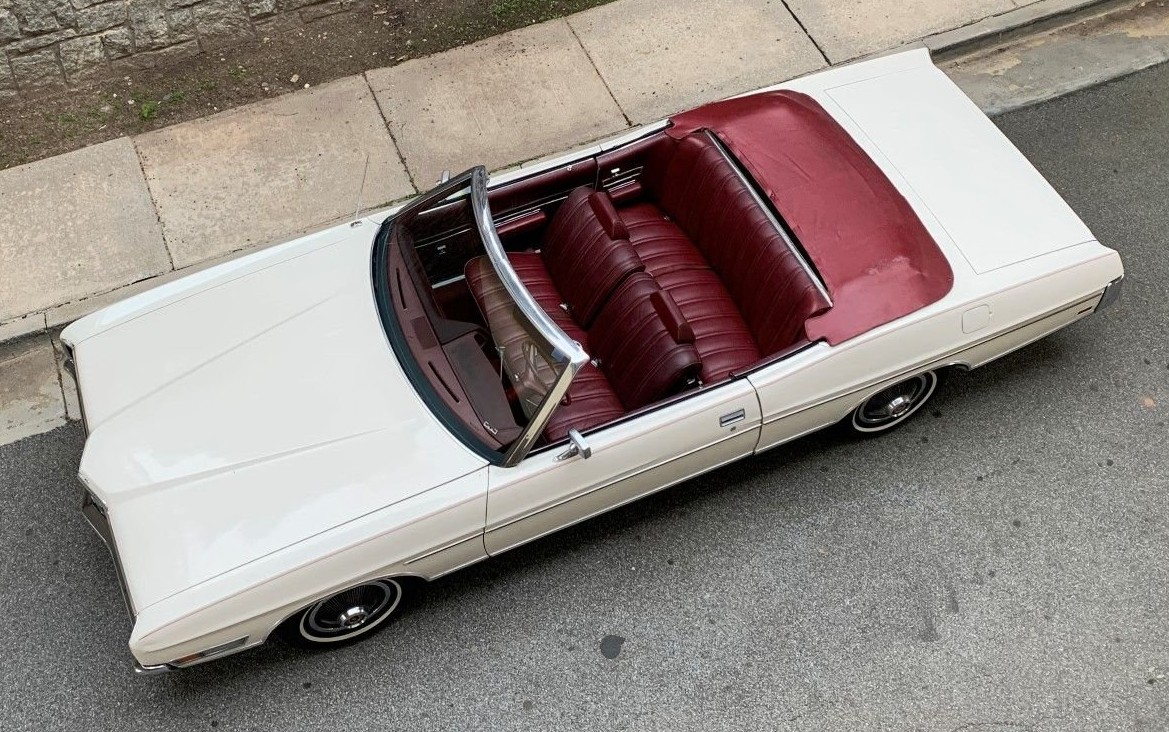
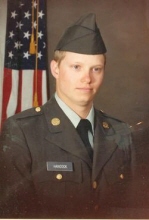
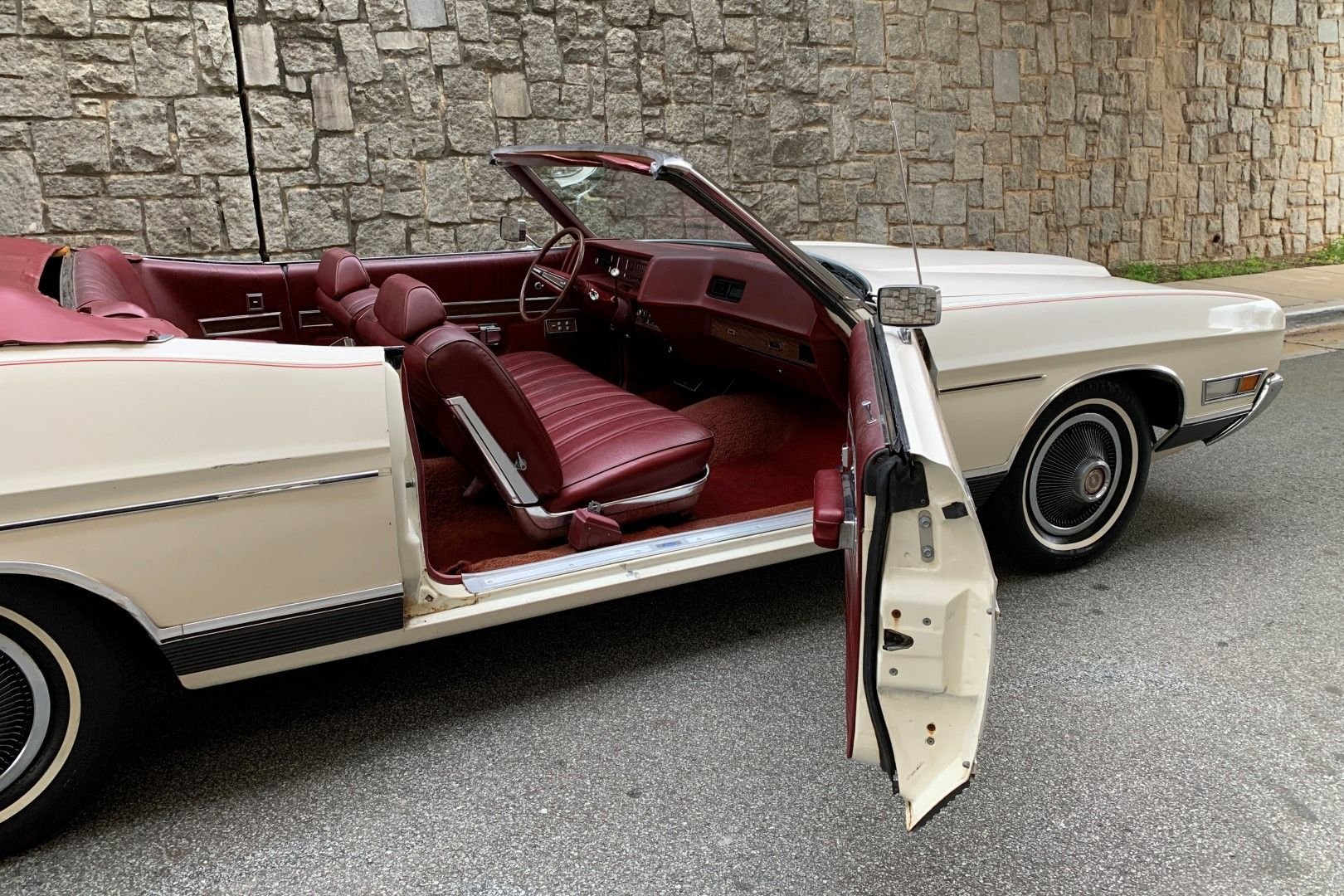

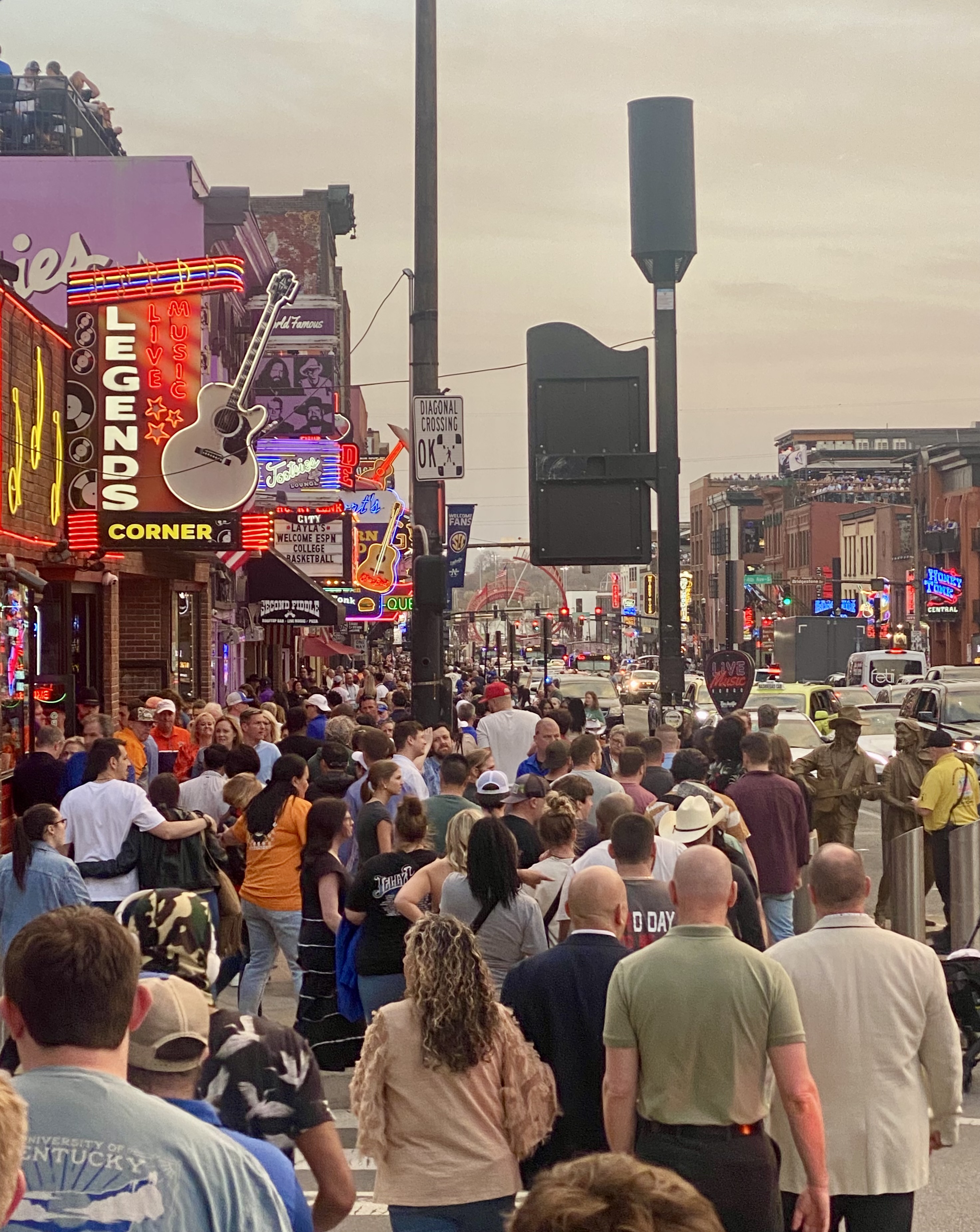


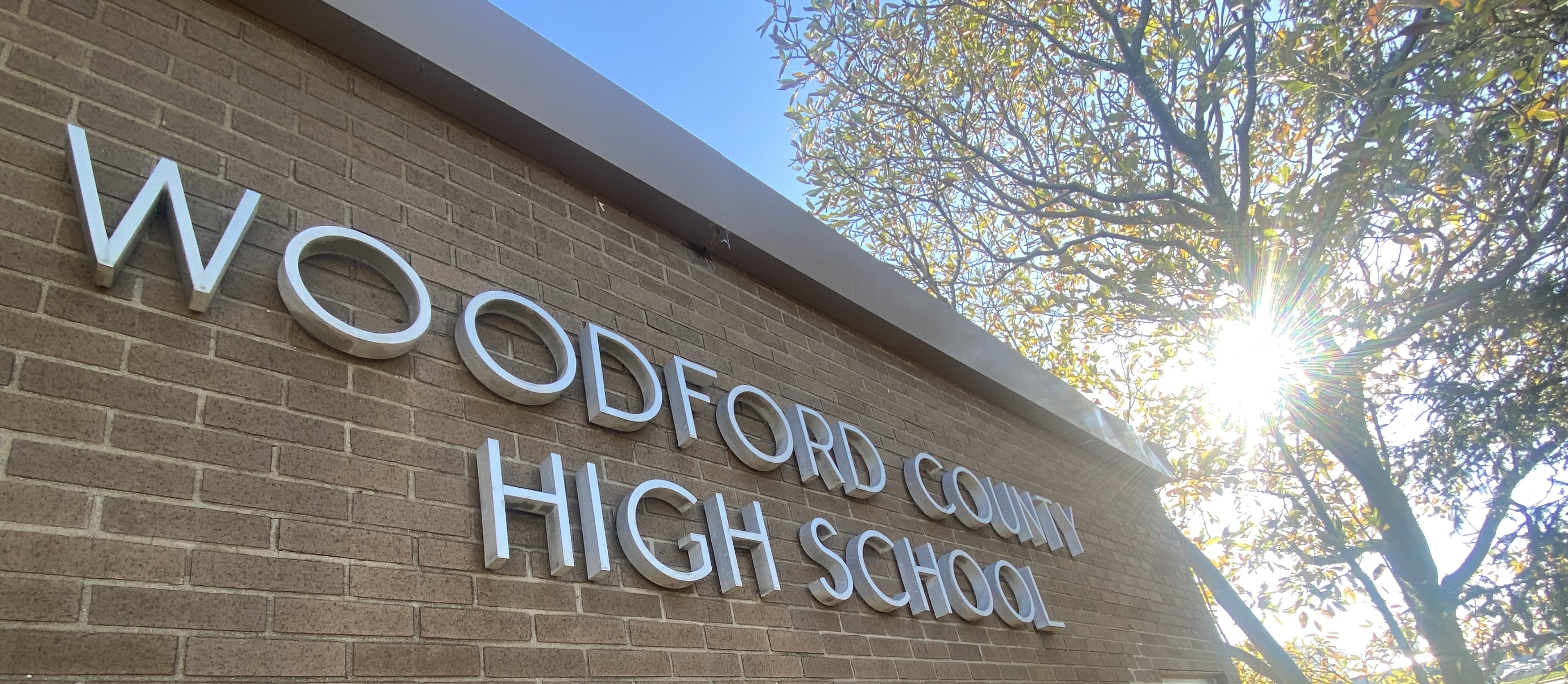

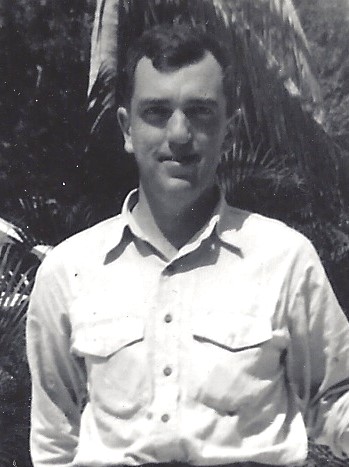

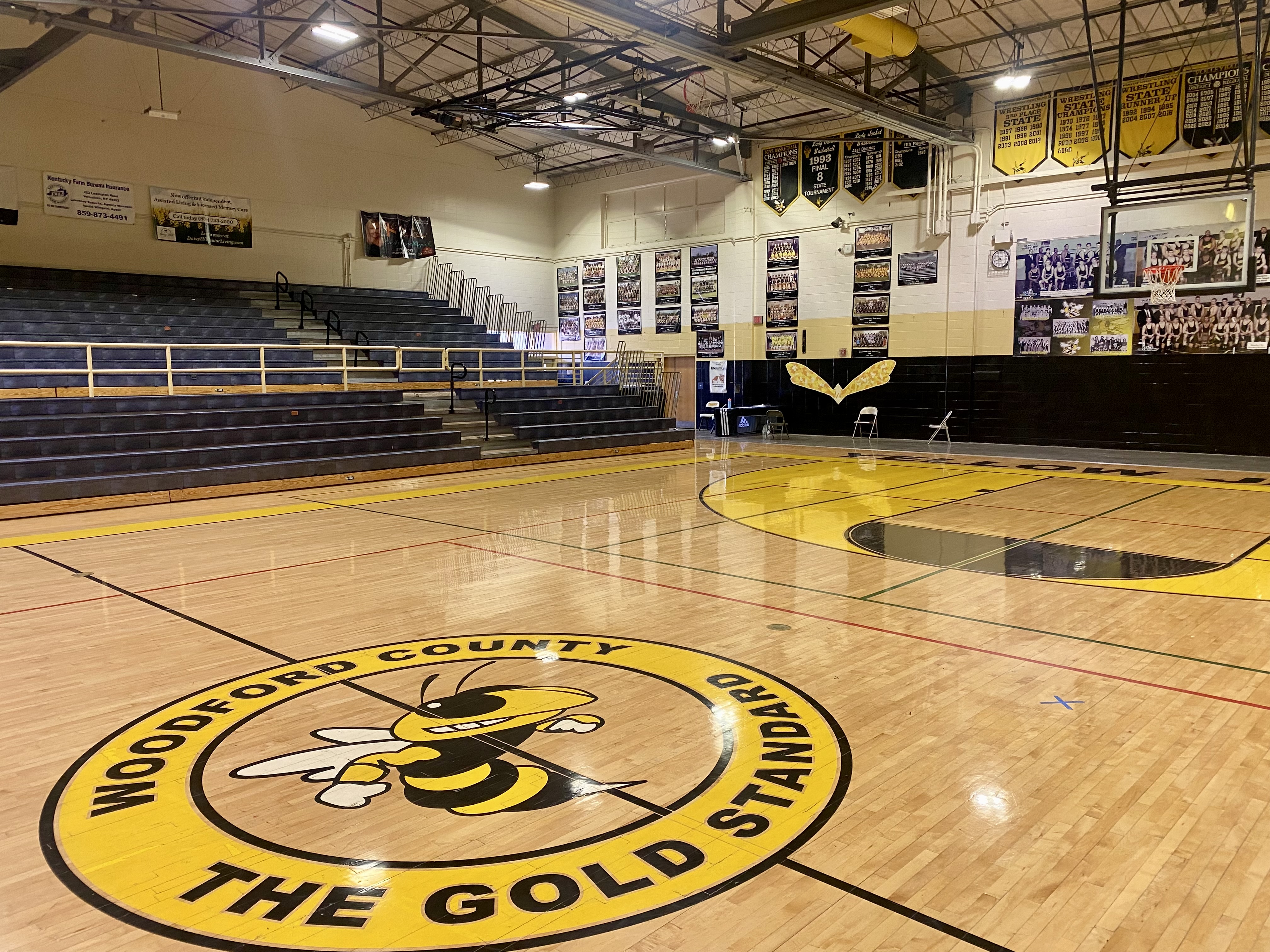
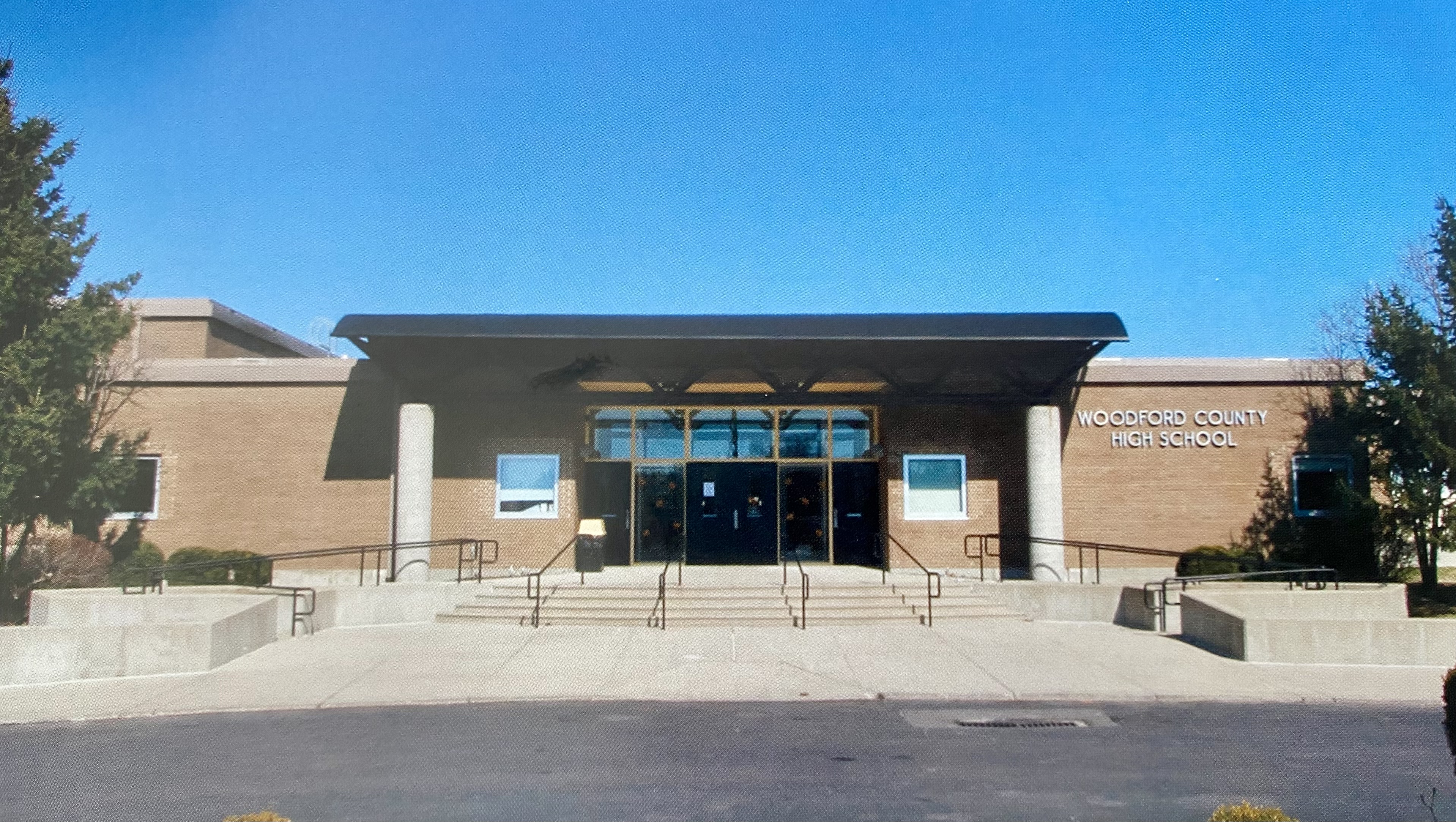
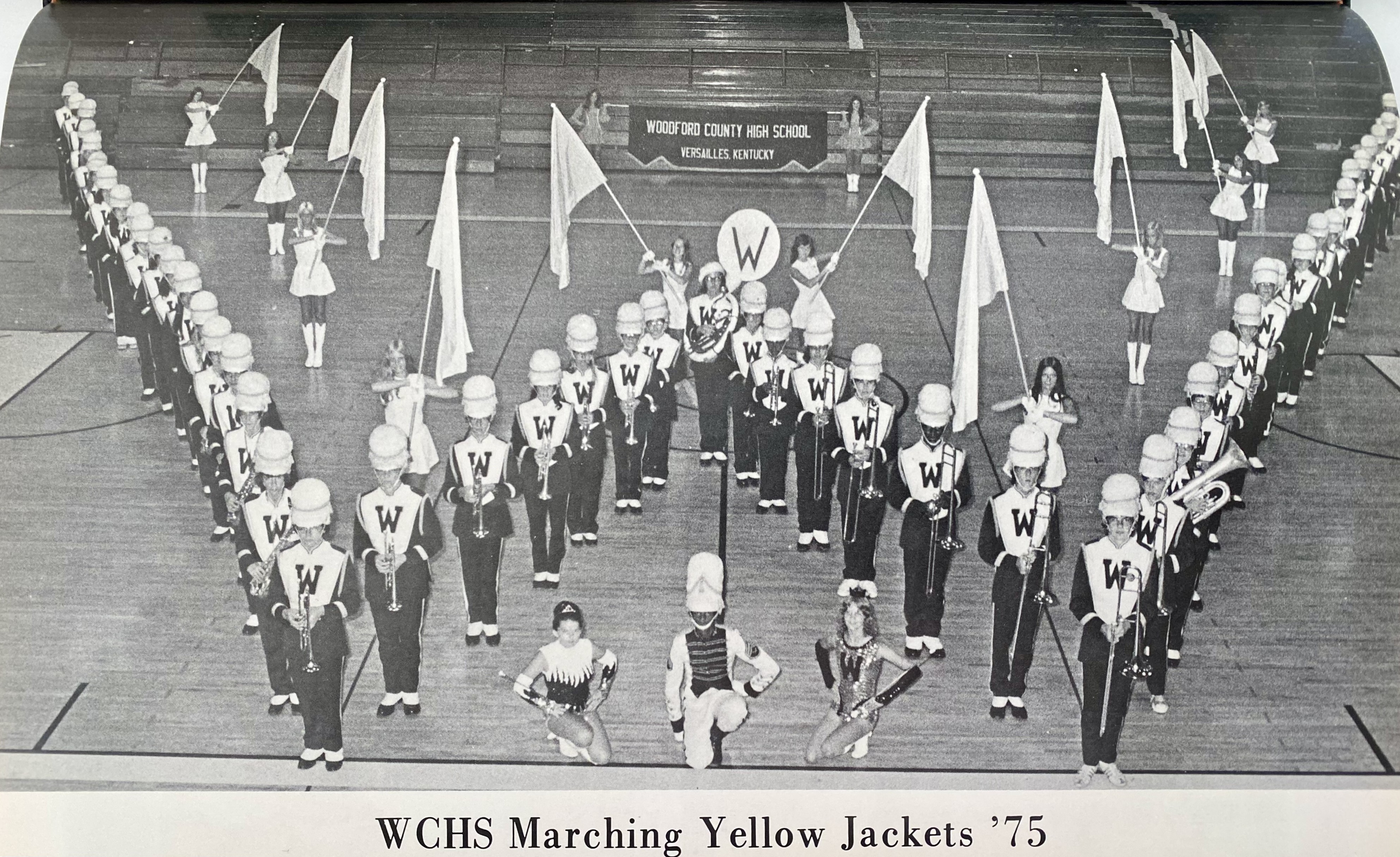

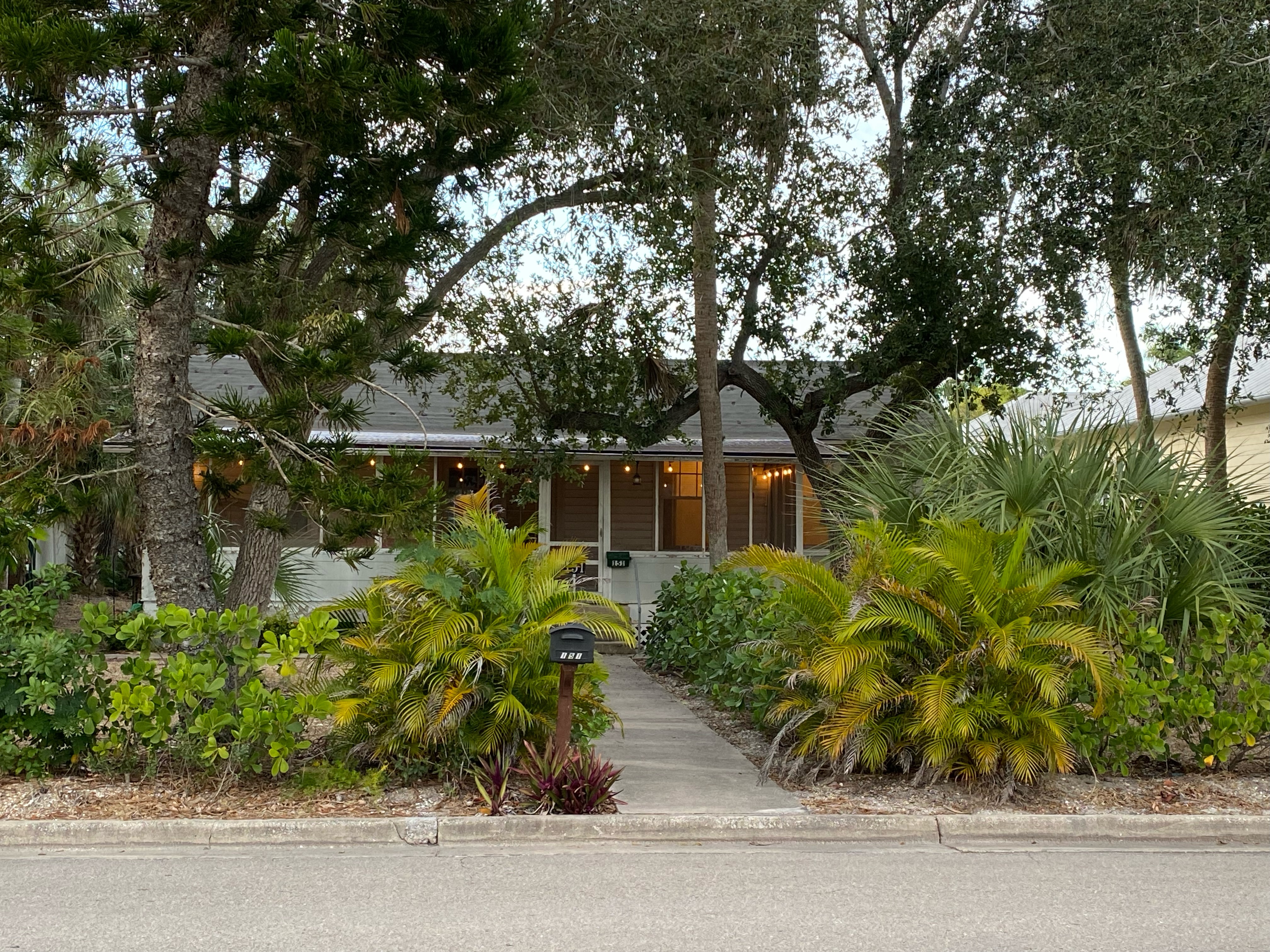



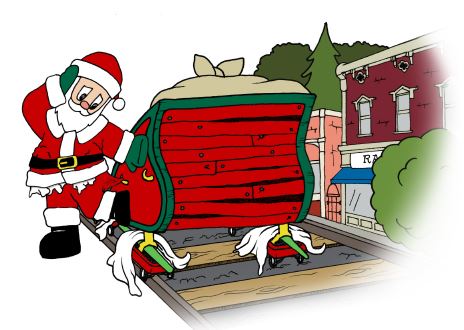
 Of a Midway Mind