I Love Reunions

There are two types of people in the world: those who attend reunions and those who avoid them.

I’ve always been an attender, you know. I love ’em. I go to college reunions, but I especially like my Woodford County High School reunions. There’s one this weekend, and I’m going.

A reunion is appealing on the most basic level because it’s a party, and there’s food and drink and music. And friends are there—people I’ve known for a long, long time.

Here’s where it gets puzzling, though. You can’t really say your reunion is packed with your best friends, can you? That’s probably because you’ve drifted apart from many of your buddies from back in the day, or maybe your closest friends from high school are reunion avoiders. The friends you see at reunions, then, might not be your best-ever friends. That’s how it is for me, anyway.

So why do I get such a good feeling about the people I reunite with?

It’s not because we’ve got so much in common. We likely went to different colleges (or not at all), moved to different towns or states, work in different fields, and hold different religious and political values. Sure, we shared the same high school 30 or 40 years ago, but we now lead lives apart. If I were lifetime besties with the folks I see at reunions, we’d get together more often than once every five years, right?

But we did share the same high school. I mean, we walked the same halls, we went to the same ballgames, and we cruised the same (lame) hot spots on weekends. You know, growing up in a Kentucky county with a single high school guaranteed us a set of shared experiences, even if our homes and families were quite different.

So even if we’re not everyday buddies, there’s something there. Something that runs deep and true.

When I go to the reunion this weekend, I won’t see the guys in my core group of buddies—not all of them, anyway. Instead, I’ll see three people from my home room, two from Ms. Cox’s advanced chemistry class, eight people I was in band with, a girl I took out a couple of times, and several girls I wanted to take out but was too chicken to ask.

And here’s the thing: When I talk to these folks, we’re going to help each other remember things we had both forgotten. Some memories are funny and some are painful—after all, we were teenagers navigating a transformative period. By talking to them, I’ll be reminded of people and experiences that helped mold me into the person I am today. And not only will they round out my memory of high school, see, they will round out … me.

At reunions, I have been reminded of my youth. I have been reminded of the person I was. Of the person I wanted to be. Of the person I became.
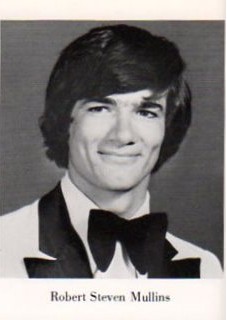
Hands down, the best thing I ever experienced at a reunion was getting to know Robbie. He

robbie

Robbie at our 10-year reunion, 1986

and I shared the same graduation year—1976—but little else. We didn’t have a single class together. His friends were ball players; mine were musicians. He was an athlete who started at quarterback and also excelled in basketball and baseball. He was one of the most popular guys in school, and I didn’t know him, not even a little bit.


It drove me crazy, mostly because he was adored by the girls, and I—even though I sat first chair trombone for four years (first chair!)—was not.

I didn’t know him, but I was always pretty sure he was a dumb jock. I didn’t know him, but I was pretty sure those girls made a big mistake.

Then I got to know Robbie. At a reunion. I can’t tell you how it happened, but we found ourselves in the same corner of a room or at the same table, and we started talking. We damn near had to introduce ourselves; that’s how separate our high school lives were.

And I’ll be damned if I didn’t like him. Robbie and I talked for a long time, and I discovered he was insightful and funny and a dang good guy. No wonder the girls liked him. In that one evening, my decades-long impression of Robbie was changed forever. And with it, my belief in the unfairness of high school hierarchy.

Don’t get me wrong. High school society is still wack. I mean, it’s owned and operated by teenagers. But because I went to that reunion and became friends with the Robbie I never knew as a teenager, I became a better adult. And at the next reunion five years later, we continued our conversation, comparing notes about our lives and our time in high school.

But Robbie won’t be at the reunion this weekend. He died a few years ago. I’ll miss him, believe me, and I’ll miss others who ran out of life before they became old men and women. I won’t dwell on it, though. I’ll be having such a good time comparing notes with other folks and rounding out other memories, I won’t let Robbie’s absence weigh me down. But there’ll be a moment or two.

Life zips by. It comes and it goes, and that’s a fact. So if I can catch a kernel of insight from a classmate at the reunion this weekend, I’m going to grab it. Those kernels won’t be around forever. Neither will those classmates. And neither will I.

I love reunions.

Missed You Will Be

I’ve been thinking about words of sympathy. I read a daily dose of them, see, because I’m one of the lucky 134 million Americans who hold a Facebook account.

Facebook users are highly sympathetic, but I don’t know if their words always match their actual level of concern. Maybe they do. I’m willing to accept that writing “Prayers” in response to posts about friends’ troubles is shorthand for an expression of deeper sorrow or more complicated compassion. That said, when you write “Prayers” for the loss of a parent and the loss of car keys, we have to wonder how much praying is really going on.

But my main gripe about expressions of grief is that sympathizers so often use the passive voice instead of the active voice. A quick reminder: In the active voice, the subject performs the action: The boy wrecked his four-wheeler. In the passive voice, the subject isn’t taking a direct action: The four-wheeler was wrecked by the boy.

(And hey, that boy damn well better be wearing a helmet.)

You can see that the active voice is more straightforward; it better expresses what’s happening.
• Eric Clapton didn’t sing, “The sheriff was shot by me.” He said, “I shot the sheriff.”
• Frankie Valli crooned, “My eyes adored you,” not “You were adored by my eyes.”
• The Stylistics sang “Betcha by golly, wow,” not “Wow-wee … um … Well, you get my point.

Now, there are times when the passive voice is preferred, such as when the performer is not known: The plastic forks were taken. Another appropriate time to use the passive voice is when the writer wishes to be vague or impersonal. Unfortunately, that’s the context in which so many sympathy expressers place themselves—just when they’re making a very personal statement.

When I am deeply grieved by the death of someone, I try to remember to say or write, “I’ll miss him.” Right? It’s a straightforward expression of my feelings. But I often hear or read people say, “She will be missed.” Or when a colleague leaves the workplace, the farewell card is filled with a similar phrase: “You will be missed.”

What if you went to visitation at a funeral home, and when it came your turn to speak to a friend whose wife had died, you said, “She will be missed.” And what if the grieving widower said, “She will? By whom? Do you have, like, a list? Oh, you mean by you? Do you mean you will miss her?”

Grieving widowers never say that, so don’t worry. But by removing yourself from the statement, you are also removing yourself from the sentiment. You’re saying the deceased will be missed by unnamed individuals or by the population at large or by … what are you saying?

Look, maybe you really do want to take yourself out of the picture. Maybe you won’t miss the guy. But if you will, own it. And say it with words: “I’ll miss him.”

Burial at Sea(t)

“My plate’s pretty full right now.”

You probably hear or say a variation of that phrase every day, and I say it myself sometimes. We’re not at the China Buffet when we say it, of course. We’re likely talking to someone who has just asked us to take on a project for work or church or community or school or whatever. It’s not that we don’t want to do it; it’s just that our plate is already full of projects for work and church and community and school and whatever.

And while I might say that my plate is full, that’s not the truth. What I mean is my seat is full. My chair at the table in our breakfast room is the repository for all the stuff I need to deal with: bills to be paid, mail to be handled, receipts to be filed, magazines to be read, and items to be stored.

This system was created by my wife, who has a knack—and a need—for neatness. At some point Mary Beth must have dropped off my daily mail on the table in front of my seat, probably after finding the mail-sorter-thingy already filled with bills to be paid, mail to be … you get the picture. After a few days of mail piled up, she must have asked me to go through my stuff, and I possibly/probably moved it from the table to the seat. Out of sight, don’t you know. After a while, Mary Beth just started adding to the stack of stuff on the chair.

So my system has come to this: Periodically I’ll stand by the chair and sort through the stack-o-crap and see if there is anything that requires urgent action. Naturally, the non-urgent stuff just stays on the stack. You might be asking—as my wife does with increasing intensity—why I don’t just handle these items as they come in. Just pay the bill, read the article, file the receipt, etc.

That’s like asking the manager of a restaurant why you have to wait for your food: If they’d simply cook it right after you ordered it, you’d be fed and gone much sooner. But like the kitchen at a popular restaurant, I get a little backed up.

You should see me sit in the damned thing. On any given day the seat could be loaded with three newspapers, a legal pad with notes from Wednesday’s meeting, a pack of light bulbs I need to return to Kroger (wrong size), and forty-three pieces of mail, so I have to perch my butt on about an inch and a half of wood. One day soon, the chair will flip forward and dump all that stuff on top of me. I’ll be buried beneath my backlog.

If you’d like to discuss this situation in person, feel free to stop by the house and come on in. Oh, don’t sit there, though.

Sailing from Stockholm

We left Stockholm under overcast skies, slipping beside one island after another—thousands of them. I could have viewed the archipelago through the wall of windows in our cabin but chose to go on deck for a more organic look.

Another cruise ship loomed into view, coming up quickly from the other side of a large island to our starboard. I hoped we would edge ahead and beat this boat to the spot where the shipping lanes converged, but I saw right away that the ship of strangers was moving faster than we were and would soon draw clear and assume the lead. I decided it was likely pre-arranged by the harbormaster (or whoever serves as sea traffic controller), and when I looked aft I saw yet another cruise ship in line behind us.

Three sea behemoths, taking thousands and thousands of one-day visitors away from Sweden, where only 90 minutes before we had filled the cobblestone streets of the capital city. And I do mean we had filled them, as we had filled the alleyways of Tallin, Estonia, the day before and crammed into the churches and palaces of St. Petersburg, Russia, the day before that.

For the hundredth time during this voyage, I thought about the citizens of the Baltic burgs we besieged. Did our dollars and euros and kroner outweigh our enormous imposition? At each port our ship bullied into the harbor and belched up legions of tourists into the city, where we shuffled and jostled our way into every prescribed place. We photographed every statue and bauble, often unsure of their significance, while we interacted with the locals only to ask how much, which train, and where oh where is the water closet? But not in their language, unless the more learned of us knew it, or the more daring of us attempted—and butchered—it.

Yet we made a difference, right? The onslaught of tourists bought up crafts and geegaws, fine linen and plastic, and we ensured jobs for guides and drivers, servers and barkeeps, clerks and costumed greeters. We came, we saw, we consumed.
But did we connect?

I thought about all that as our great ship departed the final port of our spectacular vacation, gliding between the islands dotting Sweden’s outer banks. A brief shower drove me inside for cover, but as soon as the rain let up, I went back on deck. I stared at the houses build near the shorelines of each isle. Through my binoculars, I studied the homes, the cars, and the pontoon boats.

Then I noticed people. Some alone and some in small groups, they had come outside to watch the parade of floating hotels lumber past. They probably stared at the same parade every week, or perhaps every day of their limited summer. Were they glad we came? Glad we were leaving? Sorry they hadn’t connected?

I saw a bald man who had strolled twenty yards from his house to get a better view. I waved, but he didn’t see me—or he chose not to respond. Three islands later I hailed a man and woman on the deck of their sailboat. But our massive ship offered a feast of details, and they overlooked me.

I watched how the wake of the ship in front of us reached each shore just as we passed it. Lapping the rocks, bouncing the little boats, and rocking the docks to which they were tethered. Then I saw one dock with a half dozen people. Not together, really, but apart. Individuals. They appeared to be waiting for a ferry.

I focused my binoculars on one of them, an older woman with a red patterned scarf on her head and a canvas bag in her hand. As I looked at her, she looked at my ship. I had already passed her when I raised my arm. I waved. And she waved back.

We connected.

Written July 1, 2014, aboard the Norwegian Star

Death in the Family

Written June 13. Sat upon for five weeks.

There was a death in our family this week, although no one is grieving except me. I understand, though, because it was part of me that shriveled up and died: my ego.
I fouled up a ceremony honoring the graduating seniors of our high school baseball team. (My son is a sophomore on the team.) I was in charge of writing and announcing the special moment where each senior walks out with his family, providing each player’s reflections on his past and future. Simple enough: I wrote questions, sent them to parents, and then compiled the responses into a single script.

I’ve gotta say, the pre-game ceremony was going well. There was laughter; there were tears. … But there weren’t enough introductions. For whatever reason, I flat-out neglected to transfer the responses of one kid into my script.

I didn’t realize my error until another dad in the press box told me I had skipped a player. I will never forget the expectant look on the faces of the player and his parents—waiting for me to recite his baseball biography.

And I had nothing to say. Oh, I stammered out his name and his parents’ names, and I remembered where he’s going to college, but then I fumbled around, trying to freelance the rest.

I literally don’t remember how it ended.

Any parent with kids in sports knows the type of community that surrounds a team. There are different jobs to be done, and parents have different skills. Ideally, the parent most suited to a job performs it—well.

I erred most obviously in not having the information in front of me at game time. But it was a series of ego errors that led to that disastrous conclusion.

My first mistake was believing I was the parent best suited to handle the announcing. I said earlier I was in charge, but only because I put myself in charge. Look, I can speak into a microphone and introduce players, but so can any number of people. I believed I could do it effortlessly, though. And that was my ego at its miscalculating worst.
I should have made and followed a checklist. I should have asked another parent—my dear wife, for example—to proofread my script. I should have checked and double-checked the script before the ceremony, preferably with one of the other dads up there.

But I didn’t, and I failed.

I failed to provide a player his moment in the Senior Night sun. I short-circuited the spotlight on that boy. And his parents. And his relatives in the stands.

I apologized, believe me. I went to the parents during the game and expressed my deepest regrets. I made a formal apology to the player—in front of the team—after the game. I expressed my remorse to the family by email. And … you know.

Other parents have said, well, mistakes happen. But I didn’t make a simple stumble. I made a deep-seated, complex mistake. I declared myself an expert then methodically proved to be a fool.

That hurts, brothers and sisters. And I don’t know what hurts most—the guilt or the humiliation.

I grieve for that boy and his parents, knowing that I ruined their celebration of four years in a varsity uniform. It’s a grief that cuts deep.

And though my ego suffered a mortal wound, I will one day find comfort in moving ahead without it.

But not today.

Today I’m still grieving.

Praying for the Bus

Way back when, my sisters and I used to wait for the school bus at the end of our driveway. We had to get there early enough to make sure we didn’t miss Mr. Jones and bus No. 32, and that often meant we had to stand around for several minutes.

Kentucky-cold winter mornings were the roughest, of course. A minute felt like five. Two like 15. Where’s the bus? Did we miss it?

“C’mon bus,” we’d say. “Hurry.”

“Dear God, bring the bus before we freeze!”

So yeah, you could say we prayed for the bus.

I thought about our bus-riding days while reading in the Lexington Herald-Leader last month about the millions of public dollars Kentucky spends on transporting kids to private schools on public school buses. It’s flat-out unconstitutional, but there are well-developed arguments on the private-schools side—none that I buy.

When private school folks want to dip into public funds, claiming it’s their tax money, too, I haul out my favorite analogy: If I bulldoze my own road to town on private property because I want to avoid traffic on the state road, I can’t very well ask the state to fix my potholes. When I opted out of the public roadway, I accepted that I was on my own, expense-wise.

As you might guess, I’m also a separation-of-church-and-state guy. To me it’s the confluence of the Constitution and common sense. So when the U.S. Supreme Court ruled—a few days after the H-L article on school buses—that it’s OK to open a city council meeting with holy-for-real prayer, I dissented.

Please understand I have nothing against church or prayer—especially my church and my prayer. But I can’t help but notice that other people are partial to their prayers, spoken inside their churches. What I don’t see is the need for any of us to trot out our prayers as part of a civic meeting when we know full well our religion is not embraced by everyone.

I don’t worry about offending people who carry a Constitutional chip on their shoulder. What I worry about is shutting the people’s doors on the people. When a public entity (city council, state senate, school board, etc.) gives the official go-ahead to a specific religion at the start of a meeting, it tells those who hold other beliefs they are not a part of the crowd in charge—that they are outsiders. At worst, endorsing one religion proclaims bias. At best, it merely gives the appearance of bias.

Even if most people in an area embrace a certain religion, that doesn’t make it the official religion of the government, leaving others out in the cold. In his first inaugural address, Thomas Jefferson said, “… [T]he minority possess their equal rights, which equal law must protect—and to violate would be oppression.”

Amen, Brother Jefferson. (The dash in the quote is mine, by the way.)

So let’s get back to the bus. Let’s say I wanted to ask my county’s fiscal court to stop giving a barrel full of public cash to, say, a private, Christian school to help pay for transporting private kids on public buses. And I plan to bring up my personal-road analogy in my request.

I go to the meeting, where I’m instructed to bow my head while the Baptist minister asks God above to guide these public officials that they might be wise in their decisions.

Yeah, they might be wise. They might be biased, too. Because that’s the way it looks. And sure, I expect every elected official to carry his or her own religious beliefs—or not—but it’s not right to establish one religion as the official faith.

It used to be unconstitutional, and I predict it will be again some day.

OK, that’s enough ranting for one blog entry.

I will say this, though: Every time my sisters and I prayed for the bus to come, it did. But not always right away. And not if we had already, you know, missed it.

A Title that Will Never Grow Old

First published: June 21, 2012

Say it with me: “State Champions.” As a baseball dad, I can’t hear it enough. It just doesn’t get old.

Now, those of you who aren’t attuned to high school athletics might view the celebration surrounding Woodford County High School’s improbable run to the state title as a misguided emphasis on sports. I hear you. And (I think) most of us in the victory parade agree there are more important concerns than winning a few ball games.

But this championship means more than a few games.

For the players, the season that ended with an unforgettable 4-0 win in the 2012 state finals on June 9 began in August 2011 with a series of entirely forgettable “fall ball” games. Then during the winter, the players endured excruciating sessions of conditioning. Practice started when the ground was still frozen, and the first scrimmage was March 13.

Long before last week’s parade came a procession of practices and games, cold nights and long bus rides, then hot nights—and more long bus rides. And when they finally got home each night, the players tended to their schoolwork, or else they couldn’t play.

These boys didn’t become state champions simply by showing up for the final game. They worked their way to the top, showing more discipline, determination and dedication than most adults are ever called on to display.

A friend of mine suggested I write a story about the Yellow Jackets’ sensational season. And while there’s a magical quality about their historic title run, the backstory is downright undramatic—a long season of grit and gradual improvement. But know this: When you look at a team photo or at images of smiling, celebratory players, there is indeed a story behind each face. Every player faced his own challenges, his unique self-doubts.

At some point, perhaps while languishing on the bench or failing on the field, each player must have asked himself the same question: “Is this really worth it?”

I daresay each player now has the same jubilant answer. Because not only did the team win the school’s first baseball state title, they did it in front of thousands of Woodford County fans—grateful, astonished and raucous fans.

And the hits keep coming for the players. The community has wrapped them in supportive arms and showered them with praise and genuine affection. Just a month ago, these boys were finishing the last game of the regular season—better than most, but still a “regular” season. Their record stood at 27 wins, 6 losses. And they never lost again. While ever-growing crowds of hometown fans watched, our boys—our sons, friends, students and neighbors—found a way to win every game in the district, region and state tournaments.

It’s been a wonderful ride, even from my seat in the stands. Eventually, of course, the brilliant glow will soften, the streak of wins will end and the attention will fade. And although the boys will soon leave their teenage years behind, the title of State Champions—and all the discipline, determination and dedication behind it—will never grow old.

The Real Miami Heat

I’ve been hot before. I broiled in the 105-degree heat of a youth baseball tournament in Knoxville last year. I ran a 5K on the dark clay of Lexington’s Red Mile harness track at high noon some 20 Junes ago. I rode in the way-back seat of a vacation station wagon before air conditioning was available in Ford family cars. So I’ve been, you know … hot.

But I was introduced to a whole new hell-hot in South Florida last week. And it involved heavy manual labor, whose acquaintance I seldom make.

Along with 300 other volunteers, I journeyed to the Sunshine State as a participant in “Tourism Cares for Miami.” I figured I’d work during the day and then maybe explore the city. On the flight down, I toyed with the idea of getting a ticket to the Miami Heat game, as LeBron James and company were playing a pivotal playoff game at home.

Background: Tourism Cares is a nonprofit organization that strives to preserve and enhance travel destinations. It’s funded mostly by people in the tourism industry as a way to “give back” (an act we used to describe as “give”).

The Tourism Cares model is to gather up hundreds of office workers and put them to work, accomplishing in one day a load of labor that would take a crew of professionals as long as, oh, four days to complete.

Our tasks were twofold: 1) clean up all kinds of crap at the soon-to-be-restored Miami Marine Stadium and 2) plant native trees and sea grasses at Virginia Key Beach Park. I say “our tasks,” but we were divided into two groups, one for the trash and one for the planting. I was assigned to the group of planters, and after breakfast and a series of welcome speeches, we formed work groups of three. Our group had four (because … math), which we inexplicably reduced to two groups of two.

At the work site, organizers distributed the tools we would use—a shovel and a mattock. The latter, in case you’re unaccustomed to hand tools, has a pickaxy point on one end and a half-hoe on the other. (Insert half-hoe joke here.) A local expert doled out safety tips, which included the avoidance of the following: prickly plants, poison ivy, heat stroke, snakes, sunburn, alligators, mosquito bites and chopping your colleague’s hand(s) off. Because I had just the one colleague, Maria, my odds of accidental hand-chopping were relatively low.

By then the sun was sitting fairly high, and the long-sleeve shirt I had been instructed to wear was doing a great job of holding in my body heat. After Maria and I chopped and dug our first hole, I traded her for the mattock so that I, the manly male of the duo, would perform the more demanding task of ground chopping.

That’s the last thing I remember until lunch, when I ate a Cubano sandwich, consumed a massive slab of flan and downed two frozen lemonades. Sugar will melt under high heat, and I surely dissolved in the after-lunch work session. I hope I was still planting trees, but I might have been digging up already planted trees. Or I could have planted Maria. I was a little heat hazy.

My next memory is walking (stiffly) to a post-labor celebration at the Miami Seaquarium. At that point I was willing to be fed to the killer whales just so I could cool off. Instead, we were seated and offered a non-Cuban meal, which I did not sample. (No flan, no fun, I always say.)

I do remember a sampling of conversations I had with other volunteers. We were bone-tired and stinky, but we were satisfied. Even though we had worked without keyboards and cell phones, we accomplished an incredible amount. Our (big) group planted 785 trees and 11,000 sea grass plants. The other group filled six huge dumpsters with trash and debris. We pushed both projects forward in giant steps, and because our efforts were covered by local TV stations and the Miami Herald, we helped create local momentum.

More than one of my fellow volunteers marveled that we had just done for free what we routinely pay others to do in our own back yards. And that’s what made it all the more gratifying. Working outside my comfort zone – and my own back yard – to aid a cause that’s important to others made it worth all the sore muscles.

And the spirit of teamwork multiplied the effect. It was the force that brought us together, pushed us forward and enabled us to do more than we ever would have tried on our own.

But gawd, was it hot.

As I soaked in my tub at the hotel, I abandoned all thoughts of finding a ticket for the basketball game, where the Miami Heat eventually won their way into the NBA finals. The city went wild. But for my money, the real Miami heat was a warm feeling that stayed with me even as the dirt of the day went down the drain. I had put in a hard day’s work. I had accomplished something that matters.

I’ve been hot before. But Miami heat was different.

Pineville Proud

I’m proud to be from Pineville … even though I lived there only one weekend.

I just returned from the Kentucky Mountain Laurel Festival, hosted by the people of Pineville. The town of 1,732 rests rather snugly between the Cumberland River and Pine Mountain in Bell County, the southeast corner of Kentucky.

I don’t know if I’ll ever go back to the festival, but I don’t think the experience will ever leave me. The highlight of the weekend is the crowning of the queen; the 19 candidates each represented Kentucky colleges. I attended because my son Steele was the official escort of his girlfriend, Shelby, who represented Campbellsville University.

The first KMLF was held in 1931, making it the oldest continuous festival in the United States. I’m sure many things have changed in the past 83 years, but I sensed that many had not. The event is dripping in tradition, and I got soaked. Gladly. I drove to Pineville thinking the event might be a bit hokey, and it was, but it’s a happy, wholesome hokey.

As (ahem) parents of an escort, we were invited to a couple of receptions. Mary Beth and I left work early on Friday to attend these parties, and they truly set the tone for the weekend. The first included queen candidates, their escorts and members of the governing board. Many of the latter are Pineville natives who moved away but return each year for the festival. It was there I first learned about the leadership structure that guides and funds Mountain Laurel. The four-day event is a massive undertaking, but it’s a labor of love.

As my friend (and past queen) Libbi Justice Taylor later told me, “These people are carrying on the work their families did for the festival in previous generations.”

The Mountain Laurel Festival is a quirky-quaint celebration of community that combines the comfort of tradition with the beauty of youth. The queen candidates wear long white dresses and gloves, they promenade in an old fashion Grand March, and they aren’t allowed to drive. But their skin is smooth and their laugh is giggly. And for each of them, a limitless future lies ahead.

The reason the girls gathered in Pineville was for a chance to be crowned queen. And the coronation (that’s really what they call it) was gorgeous. In a fairy tale setting, each candidate strolled across a carpet of grass against a backdrop of pines, and the audience sighed. Even the candidates were caught up in the splendor.

“It’s just … so … beautiful,” the girl from Eastern Kentucky University whispered as she wept. I had to chuckle when I heard about her breakdown. And while the coronation was cool (even under a baking sun), the highlight of my weekend was the Saturday morning parade. It was honey-dipped in hometown sweetness. Bands marched, floats rolled and topless queen candidates waved. By that I mean they were riding in convertibles.

All the college kids stayed with local families, and Steele was hosted by a friend I worked with years ago. The rest of my family (including my in-laws) stayed in a cabin at Pine Mountain State Park. In reality, though, we were all hosted by the entire town.

And on Sunday morning, when the festival leaders told stories about Mountain Laurel stalwarts from years gone by, I could no longer laugh at Miss EKU. I got a little teary-eyed myself.

Heck, it was all just … so … beautiful.

Why the Blog, Bob?

You’re asking why, of course. Why is Bob blogging? Aren’t those snarky comments on Facebook providing enough of a creative outlet? (And can we talk him into confining his thoughts to Twitter, where he can’t elaborate?)

Nope. It’s a blog for me. I’ve had multiple requests from Facebook friends to start a blog. And yes, three counts as “multiple.” And no, they didn’t say that just to get me off Facebook. I mean, surely not.

I’ve been meaning to blog anyway. Seriously. I do some of my best writing in spates of 400 words. I call them essays because I like the sound of it. I might even start referring to myself as an essayist – possibly on my business cards. Not that I generate much business as a writer, but still. My dad told me he never really believed I was a writer until he saw my business cards that read “Bob Rouse, writer.” So maybe I can convince people I’m an essayist, too.

Bob Rouse, essayist.

It tickles me to death that the definition of essay on Wikipedia is “… vague, overlapping with those of an article, a pamphlet and a short story.” For my purposes here, “vague” offers a certain protection, allowing me to operate outside of the rules and conventions of other writing forms. (I do not intend to stray into the realm of “pamphlet,” though, as I had assumed that term was long dead and buried.)

What I suspect this blog will be – though in entry No. 1 I cannot be certain – is a series of essays (non-pamphlets) that reflect my internal thoughts … except with a filter, however diaphanous. I will, at various times, attempt humor, opinion or poignancy.

And if I could, I would charge extra for six-dollar words such as “diaphanous.” Sadly, all this comes free of charge to you. And profit to me. Like most of my writing.

Let me conclude with a few words about writing: It’s how I express myself. (Duh, right?) I enjoy the process of choosing words to express specific thoughts and feelings.

I’d rather sing, of course. And I’m not a bad singer, but I’m not good enough to make a living at it. So am I making a living as a writer? Going to work and choosing just the right … whaddya call it, um … words?

Yes I am. Kinda sorta.