Traffic Jams Are for Creeps

Traffic jams. You could say the phrase is positive, because when you’re stuck in traffic you have extra time to listen to your favorite jams.

TrafficBlogCarsBut don’t say that. Sitting in traffic jams is a losing proposition. You lose time at work. You lose family time. And sometimes, well, you lose your shit.

I can’t eliminate road rage and traffic jams, but I can put a dent in reduce the time we spend in snaky, snarly lines of traffic. Disclaimer: I need every driver in America to read and obey this essay.

That’s a lot to disclaim, I know. But I do have an answer, which, like most solutions to life’s problems, I learned in my years as a baseball dad. Cap-tip here to my friend David Couch, perhaps the most complete baseball coach either of my sons ever had. (David coached my second son, Clay, when he was 9. Clay, not David.)

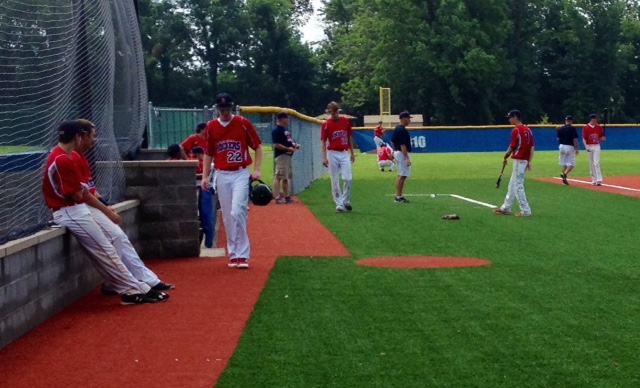
Coach Couch told his Reds that when they’re in the field, playing defense, they should move forward with each pitch. Just a little. Not a lunge or a lurch, but a subtle move. Take small, almost unnoticeable steps. Creep toward the batter.

By making tiny shifts toward the plate, Coach Couch would say, you are ever-so-slightly building forward momentum, and if the ball is put in play, you’ll already be in motion. Your first step to the ball will be quicker because you started it before the ball was struck. If you have to stop or go the opposite way, you can, because you weren’t lurching or lunging. You were only creeping: employing subtle movement toward your target.

And your target as a driver, ladies and gentlemen, is the other side of the intersection before the damn light turns red.

In a perfect world of traffic, all of us would react immediately to the green light and go—fast. With each driver accelerating quickly as the light turned, the entire column of cars would, as a group, rocket forward to the desired cruising speed. Traffic lights would be perfectly timed so we would all achieve rapid (but safe) advancement.

But our traffic world is far from perfect. And one significant problem is that the drivers in front of you react slowly to the green light. They might have been texting or dozing or zoned out, and they don’t notice that it’s time to go until a few car lengths open up in front of them. And you know what would fit nicely into those empty car lengths? More cars! These drivers are dawdlers, and every dawdler that gets a late jump creates more unused space that delays the drivers behind them.

Also slowing you down are fainthearts. Overly cautious drivers, fainthearts intentionally allow space to build between themselves and the car in front. They remember well the drivers’ manual that prescribed ample stopping distance as a defense against certain death on the highway. Of course, you’re not on the highway with its high speeds. You’re in city traffic. Doing 4 mph.

According to my complex traffic models and scientific calculations, these unnecessary gaps between vehicles decrease traffic flow by 28 percent. Admittedly, my traffic models and calculations were created in my head while I was sitting in traffic.

It’s fair to say, though, that by eliminating the needless spaces that drivers create—either through inattention or fear—more cars could get through an intersection. Maybe yours, too. It’s that 28 percent inefficiency I seek to correct, which would make drivers more likely to get to work on time and get home sooner to their families (and Netflix), and less likely to become road ragers.

One common action is no help at all. Often I’ll see dawdlers snap to it and give it the gas, quickly eating up the 30 or so yards of slack they created with their negligence. But for the rest of us to catch up, we must similarly rocket forward, and as we discussed earlier in our perfect-world scenario, that ain’t happenin’.

So you must creep. Just like a second baseman on Coach Couch’s Reds, you’ve got to creep forward as the pitch is thrown—or, in this case, as the light loses its redness. If everyone is creeping, you’re all on the move sooner. You’re not rocketing, but you’re advancing. And as you advance to, say, 5 or 6 mph, then you can allow a little space between you and the guy in front of you. It’s more efficient to cede space on the move than from a dead stop.

It’s all part of my 28 percent plan for improvement. When everybody creeps in traffic, more of us can get through the light. We’ll get to work or home sooner. And your jams? Just play “Life Is a Highway,” “Shut Up and Drive” and maybe “Hot Rod Lincoln.”
Fight Fire with Pliers

“Did you break down?” my son asked as I entered the garage. Then he saw the fire extinguisher. “Oh! Did the DR mower catch on fire?”

“I don’t know,” I answered calmly. “Maybe.”

I mean, what is fire? If it’s shooting flames, then no. If it’s a lot of smoke and some smoldering bits of stuff, then yes, the DR caught on fire.

I love my DR mower. Officially, it’s a field and brush mower. You walk behind it and it chomps up big weeds, small trees, used cars and new bicycles. I think I read that DR stands for “Done Right” (painfully lame), but I think of it as “Destructo-Rotor.” It plows a damn path.

Only today it was on fire. Or nearly on fire, as we discussed. I had generated a good deal of smoke with the DR once before, when the weeds I was cutting got sort of tangled up in the engine and began to smolder. Today, though, it wasn’t weeds. It was a mouse house.

When the DR started smoking, I pulled from the engine area charred pieces of grass, shredded paper and what looked like insulation. A mouse’s nest. That part of the engine is marked “CAUTION HOT” and it was. After I fried the fingerprints off two fingers, I went to the garage and fetched my No. 1 tool of all time: needle-nose pliers. (Full disclosure: I am ignorant about tools and engines, even when fire is not a factor.)

And I grabbed a fire extinguisher as well. Better safe than seared-ey.

Extracting the smoldering bits of mouse house went much better with the pliers, but the smoke was still rising. I decided to gamble on blowing hard into the engine block. Best-case scenario was blowing out the fire, something I routinely did while trying to start a fire in the fireplace. Worst-case scenario was supplying air to a few sparks that needed only oxygen to become a full-blown blaze. And the gas tank was close by.

I checked to make sure I could reach the fire extinguisher. What’s the correct technique for using one? I tried to remember the directions. “Sweep the left” went through my mind several times, until I realized I was confusing fire-fighting advice with the order from the evil sensei in “The Karate Kid.”

“Sweep the leg.”

Did I have a problem with that? No, nor did I have a roaring fire. After a few rounds of blowing and plucking out scraps of the mouse’s nest, the smoke ceased. I then returned the fire extinguisher to the garage—briefly explaining its role to my son—and went back to mowing.

Maybe I should have let the DR cool off awhile longer or maybe waited to take it to a repair shop. I wasn’t worried, though. I had kept the needle-nose pliers in my pocket.

I love the beach. I love the beach.

That’s from a song my sons “wrote” when they were little kids on vacation years ago. It’s more of a high-low chant, really. And while there’s certainly nothing profound about the phrase, it hits the spot for me.

I’ve been going to the beach regularly since I was two. And my time in Naples, Florida, was such big part of my life for the next 20 years, I will one day write a novel set there. Or a screenplay. Something bigger than a blog, you see.

I just returned from Tybee Island, outside of Savannah, Georgia, where we traveled for a week of baseball with my son’s U16 team. Because of thunderstorms and waterlogged fields, though, we played only nine innings the whole time we were there.

Baseball is, as I say far too often, reliably unpredictable. Unchangingly changeable. Steadfastly erratic.

Knowing that, we baseball parents were wise to stay at the beach, even though the games were all to be played some 30 minutes away in Savannah. Because unlike baseball, the beach is certain. Oh sure, it rains at the beach, too. But we wait out the rain delay and go back and play. Or swim. Or walk. Or sit. Or snooze. Or we watch others play, swim, walk, etc.

Tybee gets a solid 9 on the people-watching scale. The beach is wide and flat, providing ample space for hundreds to set up for the day. Some bring elaborate beach tents, while others simply show up with a towel. We saw one lady dragging chairs from her hotel’s dining room to the water’s edge.

The beach was crowded, but not overcrowded. It was humming with activity, and the tune was snappy. I read a book in five days, but I could have read it in two were I not so distracted by other beachgoers. Not interrupted. Distracted. Tantalized. Irresistibly drawn to the skintastic spectacle of people at the beach. Getting tan. Getting exercise. Getting drunk.

And having fun. I watched a little girl run from the lapping waves then turn and chase them back to sea. I saw couples produce paddleball sets and families setting up bocce ball games. Our baseball boys went from throwing a ball around in the surf to throwing each other around, and then they took turns driving a bicycle into the crashing waves.

God, I love the beach.

I ran at shore’s edge a couple of mornings, and it’s a whole other vibe when the sun is just starting its journey. As it crests, so does the crowd. More squeals from kids, more shouts from parents and more tunes from boomboxes. Or whatever blasts music these days. In my day, it was D-battery-powered players blaring out beach-town radio stations.

My beach experience has evolved through the years: I went from chasing waves and sea gulls to chasing Frisbees and girls. And now I chase memories and dreams.

I see sunburns and remember my painful shoulders. I see college guys and remember my idiotic youth. I see bikini girls and remember the eternal quest.

And the dreams are for real. I think about what role the beach might play in my future, when my wife and I take vacations with only each other. And maybe sometimes with my sons. And their wives. And families.

And don’t forget that novel I told you about—the one that might be a screenplay instead. I’ll title it something clever, but if you read between the lines, you’ll see “I love the beach.”

Play Ball! (… any day now)

Baseball can teach a kid the value of dedication, when hard work and regular practice boost performance. It can teach a kid the value of discipline, where controlling your emotions results in cool, steady decision-making. And baseball can teach a kid the value of teamwork, where sacrificing personal glory results in greater team success.

The sport saves its biggest lesson for parents, though, because over and over, baseball teaches us the value of flexibility. As in don’t-make-any-plans-for-eating-or-sleeping flexibility.

I suppose the parents of kids who play indoor sports—basketball, swimming, volleyball, bowling, etc.—can arrange their lives with confidence, knowing that only the most catastrophic weather events will cause the game to move to a different day or time. You can nicely wedge a game into a well-planned schedule of work, meals, Netflix and sleep.

But baseball can string you along for days. On call. On edge. And this weekend, while the rest of America is celebrating Independence Day, we’re chained to our cell phones. We’re imprisoned by rain clouds.

It’s raining outside this weekend, and dang it, that’s where baseball is played. Football and soccer are also played outdoors, along with, say, pole-vaulting, but with those sports, you can muddle on during a rainstorm, pausing only for lightning, and continue play on a soggy field (or foam pad). But baseball, for all its eye-black bravado, wimps out after only a quarter-inch of rain lands on its manicured infield. (Note: Outfielders are on their own. For all baseball cares, outfielders can use swamp buggies and airboats to retrieve balls and return them to the infield.)

My son’s summer travel team, the Kentucky Rockers, is entered in the Supreme National 16U Ultimate Baseball Championship of All Times. (You pay extra for each word in the tournament title.) The 96 teams from at least that many states (right?) were scheduled to play on 15 ball fields in and around Louisville. Each team would get five games of pool play, which means playing all the teams in your pool, and the results would determine which teams advance to the elite eight* championship bracket, with tournament play determining the Supreme National Champion (etc.).

Unfortunately, we’re having a little trouble getting the tournament off the ground—or more accurately, keeping water off the ground so we can play the tournament.

Our first game was on Wednesday, when the mighty Rockers defeated a team from Ontario 2 to 1. I missed that game, electing to go to work and earn money for new baseball pants, which routinely get torn and stained with embarrassing brown skid marks. Had I known the Canadian showdown would be the only sure thing during the five-day extravaganza, I might have skipped work.

We were scheduled to play our next two games Thursday morning, then one Friday, and another on Saturday to set the stage for tournament seeding. Since that victory over Team Canada, though—and I write this on Friday afternoon—Louisville ball fields have received anywhere from a half-inch to 2.5 inches of rain.

Remember what I said about a quarter-inch ruining a field. The rain has made a mockery of the schedule. “Haha,” the rain said, using the text lingo of today’s youth.

Even on a good day, baseball has lots of standing around.

Even on a good day, baseball has lots of standing around.

The Rockers have been re-scheduled no fewer than 17 times—on an ever-changing series of fields—but we have yet to leave the house. You have to stay close to your car and baseball equipment, see, because makeup games are being scheduled every few minutes. With 96 teams, that means 1,318 players are on hold, as are 4,310 immediate family members—not counting 1,809 grandparents—and untold numbers of umpires, scoring officials and hotdog cookers.

I signed up for tournament text messages, so with each cancellation, rescheduled game, subsequent cancellation and further rescheduling, I get a text. In just the past hour, I got 43 dings. The tournament director has two bloody stumps where his texting thumbs used to be.

His latest message: “Saturday schedule being built as we speak. DO NOT go home.” I assume he is speaking to the parents from Canada. Those of us who live close to Louisville haven’t left home since Wednesday night, as I said.

Without baseball, there are other activities we might have enjoyed this Fourth of July weekend. There’s a patriotic concert in Lexington, fireworks in Midway, a street party in Versailles and a 5K run in Frankfort tomorrow morning. Heck, I might even have purchased hot dogs of my own and conducted a “weekend grill-out,” something I did before summer baseball took over our lives.

We set all of these things aside years ago, though, knowing that as a baseball family, we are subject to the whims of weather and the artful assignment—and reassignment—of game times and sites by a beleaguered tournament maestro. And that’s OK. That’s what we signed up for.

Because for all the inconsistencies that baseball delivers—from rain delays to wrecked weekends—it’s an experience that consistently delivers enrichment to our lives. For every minute that we juggle schedules and checkbooks to meet the demands of baseball, we spend an hour watching our sons ply the tools of baseball: dedication, discipline and teamwork.

So yeah, we’ve got to stay flexible, but our reward is just around the corner. It’s only Friday, and there are still two days of baseball awaiting us this weekend.

Oh wait—a new text just arrived. The tournament will be extended to Monday.

(*I use “elite eight” only conversationally here, as that term is copyrighted by the NCAA for use in its basketball tournament, AKA the road to the “final four,” which is also copyrighted. It’s sort of the “super bowl” of basketball. “Just do it.” “Coca-cola.” Any other copyrights I can infringe upon? “This sick beat,” anybody?)

My One-time Tour

Equus Run

My one-time tour for Bluegrass visitors included a stop at Equus Run Vineyards.

I put on a tour operator hat this week, and while it wasn’t a perfect fit, the experience was enormously gratifying.

When a conference for public relations professionals in the travel and tourism industry scheduled a landing in Lexington, Ky., I knew I had to be part of it. I’m the PR guy for the LEX-based National Tour Association, which is composed of people from tour operator companies and the places that tour groups travel to.

Like anybody, I’ve organized a group to meet for dinner. But tour operators orchestrate complex trips. Along with those dinner reservations, they’d also book air and hotel reservations for the group, plus transportation and a week full of activities.

I know what our members do, of course. I read and write about it all the time. But until this week, I didn’t know how they feel.

I joined PRSA, the organization holding the Lexington conference, so I could attend the event and become a more complete PR professional. (Note: It got me up to about 7 percent complete.) But I also wanted to use the opportunity to repay a friend from New Orleans, where my association held our big convention earlier this year. Tara orchestrated a parade of local media to cover our event, and she also starred in a seminar I led that would have bombed without her.

I promised Tara that when she came to Kentucky, I would introduce her to my home

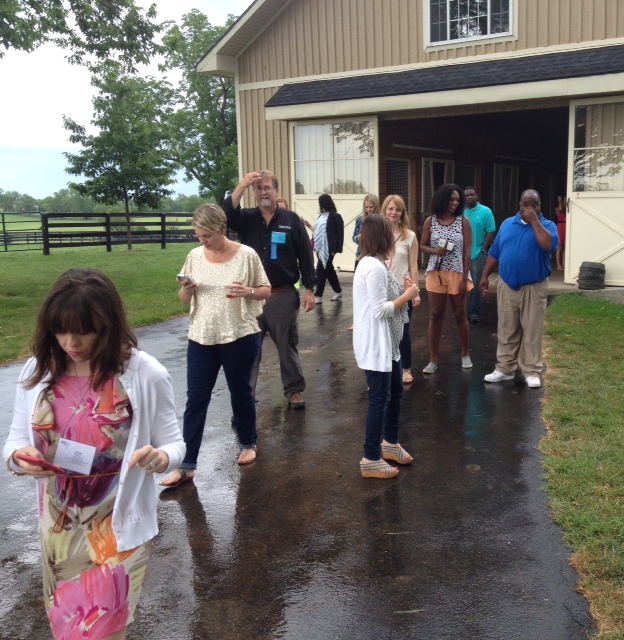
Shaun (in blue) answers questions as visitors emerged from a horse barn.

Shaun (in blue) answers questions as visitors emerged from a horse barn.

state. The guy I called to fulfill my promise was Shaun Washington, tour guide extraordinaire. He knows the Thoroughbred industry, has incredible access to the farms and is a natural storyteller.

As long as I had a tour guide and a comfy van, I figured I would include more visitors. It was my first PRSA event, though, and I didn’t know anybody. So, like a tour operator forming a group, I had to do some marketing. I sent out a few emails to conference attendees from cities where my association will soon hold events. I gave them plenty of notice and promised them a good time and a great tour. No response. Oh, and it’s free, I added. Still … no replies.

As we got closer to the conference dates, I asked mutual friends to assure my invitees that I was not Random Man luring innocent victims into a van. Most of the mutual friends played along, I guess, as a few conference-goers emailed that they would possibly join the group. Of course, after they arrived in Lexington and had bacon and eggs beside me in the morning (and Bourbon in the evening), they realized I was legit. And they told a few of their friends. I told them all to gather in the hotel lobby at 5:15.

I began worrying at, oh, 12:15. I hadn’t been as nervous since my wedding day. What if nobody comes? What if word spread and everybody comes? What if Shaun doesn’t come? These people were nearly strangers, but I felt an enormous sense of responsibility. I had promised a great tour … what if I couldn’t deliver?

Shaun showed, of course, and he delivered a fantastic experience to the sixteen folks who risked joining the Random-Man Tour. As we cruised beside lush Bluegrass fields, my guests listened to Shaun’s tales. At KatieRich Farm they swooned over the foals and mares Shaun enticed to meet us at the plank fences. Many of them took their first sip of Bourbon from a chilled bottle I brought along. (I took cups, too, BTW.) We were close to Midway, Ky., and when we worked in a visit to Equus Run Vineyards, the smiles just multiplied.

Including a smile of my own. I am never happier than when I make others happier, and with the help of Shaun and Equus Run, I hit the happy jackpot. When the tour concluded, Tara and my new friends expressed their true appreciation for the land and lives that make this part of Kentucky a special place. They enjoyed their authentic experience.

I was filled with pride of place, but also, I felt the immense satisfaction that comes with meeting new people and enriching their lives. It must be like that for tour operators every day. And as much as I enjoyed the warmth of success, I don’t think I could tolerate the chills of uncertainty that lead up to it.

I am enthralled with the group tour experience and more appreciative than ever of the people who work to cultivate and orchestrate travel experiences. Sign me up for the next tour … just don’t expect me to lead it.

Kentucky Across a Chest

It starts with the word across their chests.

I never ponder the depth of my attachment to Kentucky basketball until the end of the season. Whether I’m soaring with a national championship or sludging through the mire of what could have been, I’ll pause to ask myself, “Why am I so wrapped up in this team’s success?”

It starts with the word across their chests. The school’s players represent more than the school; they represent my home state. They carry the banner for Kentucky, and I, too, am Kentucky. I have degrees from both UK and Transylvania, and while my heart belongs to the people and experience of Transy, my soul belongs to Kentucky.

My love for Kentucky basketball is a legacy passed down from my father and a community of Kentuckians. For many in the commonwealth, our basketball heritage is our shared pride. Outsiders often say Kentucky fans cleave to basketball because there’s little else that’s positive in a state beset by poverty. I’m not blind to the difficulties of my Bluegrass brethren, but my life has been extraordinarily fulfilling, and yet I still attach myself to the fortunes of our basketball team.

And Kentucky’s recurring success buoys my devotion. Decades of loss and frustration would likely lead me to a lesser level of dedication. (Kentucky football comes to mind.) But I can’t say that for sure, because I’ve never had to live too long between successful seasons, whether it’s an SEC championship or a run at the national title.

Am I a rabid fan—a Kentucky crazy? I’m not. Oh sure, I’ve dabbled in the irrational: When Louisville beat UK in the 1983 NCAA Elite Eight, I gave away the TV I had watched the game on (after first vowing to throw it off an upstairs balcony). Granted, it wasn’t a great TV, and a friend in our watch party didn’t own a TV at the time, so it almost made sense. But really, the whole episode was little more than a public display of my allegiance to the Cats.

I no longer wrap my identity around the success and failure of our boys in blue, nor do I wrap on a black armband after a March loss. (Yeah, I did that, too.) But I have not divested myself of a deep-seated dedication to Kentucky basketball. Especially at tournament time. During each game I yell. I curse. I pace. I fall down to my knees. When we win, I am elated. When we lose, I am crushed.

But I’ll be ready for next year. I’ll follow every step of the journey toward a championship. And if we reach the Final Four, I’ll wear my favorite sweatshirt.

It’s the one with KENTUCKY across my chest.

KentuckyChest

Still (not) Crazy

I am not crazy. And if anyone tells you different, it’s just semantics.

I’ve never been crazy, and yet I love “Still Crazy After All These Years.” It’s not a song I truly identify with—because I’m not crazy, remember—but it’s a song that latches on to me. And it hangs heavy. And sweet. Bittersweet, maybe.

The song was not a huge hit for Paul Simon. It peaked at No. 40 in late May 1976—right at the time I was finishing high school. “Still Crazy” didn’t grab me until later, though. Maybe it took a few years to sink in.

Along the way—after all these years, I guess—the song has become part of my soundtrack. One of my lifesongs.

I love the instrumentation. The mellow tones of the electric piano have a pulsing, almost haunting vibe. In the single, the flute and strings float around during the bridge to the point where you almost lose the sense of the song, and then the saxophone rides in, dynamic and soaring. In this version, the sax solo verges on spiritual.

There’s an old Saturday Night Live show with Paul performing “Still Crazy” (not in the turkey suit). I can’t find the video, but I can still see the SNL bass player in a final jam, walking the song home. I love it.

It was watching Paul sing “Still Crazy” on SNL40, the reunion show, that inspired me to examine my relationship with the song. Paul’s voice is weaker, naturally, but it doesn’t diminish the song’s nostalgic intensity. It’s a sort of performance art. With his hands, he tosses off a line here and there, he directs, he cajoles, and he ten-finger stabs an imaginary keyboard.

I don’t know enough about writing music to understand how chords and keys are chosen, but I know the progressions and changes in this song strike a chord within me. Inside me. Paul gives insight into the song’s composition in this session with Dick Cavett.

That’s the music. But what about the lyrics? They speak of several scenes: encountering an old girlfriend, a late-night soul-search, and a late-life listlessness—or restlessness. And there’s an introspective verse about being steadfast and solitary. But nothing about those thoughts or actions sound crazy.

I’ve done things that might fit some colloquial definitions of crazy without being clinically insane. I constantly play for laughs. I take “You’re crazy, Bob” as a compliment. And while I’ve been clever and bold, I’ve also been obnoxious and cutting. I’ve shown poor judgment. I’ve been lazy. I’ve been overserved and irresponsible. But I haven’t been insane.

And still this song speaks to me, and here’s why: I don’t hear Simon sing crazy and think insane. I hear crazy and think longing. (Heck, he says “longing.”) I hear still crazy and think still searching. And I am, too.

I’m still searching. Still learning. Still yearning. After all—that’s right—after all these years.

I don’t worry about doing “some damage one fine day.” But I want to do something in my life that counts. Something that helps. Something that matters … to a jury of my peers. I’m still yearning for that.

I’m sentimental. I’m nostalgic and wistful. I might even be restless. But I am not crazy. And it’s not crazy to be touched by a tune and moved by the music of an electric piano. It’s a lifesong, and it’s part of who I am.

How to Win the War on Christmas

Just for fun, let’s assume I didn’t alienate my entire audience with my denunciation of “White Christmas” in a previous blog. (Also just for fun, let’s assume I have an audience.)

While we’re on the topic of Christmas, I’d like to propose a solution to the War on Christmas. This is a bit tricky, as I don’t buy that there really is such a thing, war-wise. I celebrate Christmas, and I don’t feel the least bit threatened by those who don’t celebrate the holiday. Hey, it’s not like they were going to get me anything anyway.

Others feel differently, though, and they fume and feud in public skirmishes. This article traces the history of the WOC from Henry Ford and the John Birch Society to one Bill O’Reilly, the Fox News host who rallies the troops every holiday season.

For the past decade, a major battle has been waged over words used in seasonal greetings. Years ago corporate leaders of retail stores, thinking that some non-Christian customers might feel alienated when wished a merry Christmas, instructed employees to instead say, “Happy holidays.” I don’t know if any customers had actually complained about hearing “Merry Christmas,” but when zillions of dollars are on the line, the corporate guys probably figured, “Why take the risk? Let’s keep it generic.”

Here’s why: A backlash of alienation and outrage came from the other end of the spiritual spectrum. Apparently, many Christians want to be regularly reminded that their “team” is still No. 1 in this country, and a greeting of “happy holidays” became equivalent to “Welcome to hell. Satan will be with you shortly.”

So “happy holidays” became fightin’ words in the WOC. Oh sure, there are tussles over nativity scenes in public squares and school parties in homerooms, but the yuletide greeting controversy is more widespread; it sparks up every time someone utters “holidays” and not “Christmas.”

I understand the struggle. I do. Throughout my work history, I’ve sat on plenty of team-building committees that feel the pain of planning Christmas/holiday celebrations for a work community made up of various faiths and traditions. We try to figure out how we can be festive but considerate. We want to celebrate a season that is rooted in Christian faith without stepping on non-Christian toes.

This consideration for non-Christians smacks of “political correctness,” thought by many to be an overreach of concern for other people’s feelings. (Wait. PC is supposed to be a bad thing, and that makes it sound decent—almost, well, Christian.) But for me, it boils down to this: Once you’re aware that you’re doing or saying something that offends, alienates, or insults people, how can you keep doing or saying it?

Oh, I know there are people who are overly touchy. But if reasonable people are offended, aren’t we being unreasonable if we persist in being offensive?

So that’s the challenge for all of us, whether we’re team-building committee members or store greeters or regular hey-howya-doin’ people. And while I can’t solve the office party issue, I think I can engineer a truce in the fight over season’s greetings.

Just say, “Merry X.”

For those who don’t celebrate Christmas as a religious holiday, but rather, as a cultural milestone, “Merry X” would be innocuous. It’d be, like, fill in the blank. As in algebra class, they can simply solve for X. It’s … whatever.

But for Christians, “Merry X” would be acknowledging their religion at its very roots. Christmas, of course, means “Christ’s mass.” The reason we sometimes shorten it to “Xmas” is because in the Greek alphabet, X is the symbol for the letter “chi,” which is the first letter in the Greek word for Christ. And in the early days of Christianity, believers used the letter “X” as a secret symbol to indicate their membership in the church. (Back in those days, Christians had real reasons to feel persecuted. Hear what I’m saying?)

So if a store greeter says, “Merry X” to your everyday atheist, he or she can interpret it as “Merry Whatever.” But a Christian who hears “Merry X” can nod in understanding. Smiling. “Yes … Merry X to you, too.” We in the cluuub.

So that’s it—that’s my white flag in the War on Christmas: Merry X. And if you’re feeling especially festive—regardless of religious standing—just say, “Thanks. And happy N-Y.”

Sing we NOW of Christmas?

It’s too early for Christmas music. I’ve been saying that since the day after Halloween, when one local radio station started its all-Christmas-all-the-time format.

Don’t get me wrong. I like Christmas. I like Christmas music. I like singing along with Christmas music. But for shepherds’ sakes! Eight weeks of chipmunks and two front teeth and hokey harmonies and simply haaAaaving a wonderful Christmastime is more that I can stand.

It’s the middle of November, and I’m already sick of half the songs in the list of The Top 20 Christmas Songs You Never Get Sick Of.

Starting Nov. 1, I eliminated “Mixmas” from my radio rotation during drive time. Mixmas is “Mix Radio,” which normally plays hits “from the ’80s, ’90s and today,” and now streams constant Christmas. If my other stations join the chorus while I’m still making my Pilgrim hat, I’ll steer clear of them, too. Eventually I’ll be ready for Christmas music—like, mid-December.

For years I’ve felt guilty about grumbling over the early onset of Christmas songs. The last thing I want to do is fuel the firebrands who shout about the War on Christmas. I’m not for war, but there’s no peace when the radio is blaring “scary ghost stories and tales of the glories of Christmases long, long ago” on Election Day.

So why the Christmas animus? I’ve asked myself. Why the holiday hate?

Hey, it’s not the holiday. It’s the music: too much, too soon.

I listen to the radio when I drive, and like most radio listeners, I tune into certain genres. For me it’s top 40 and oldies. In terms of frequency, I can tolerate hearing a new song three or four times a day on a top 40 station—because it’s new. When a song saturates listeners’ ears, it gets less and less playtime and eventually becomes an oldie. Oldies don’t get played every day because the station has decades of past hits to choose from. Plus, we reached a sort of saturation point with those songs back when we heard them several times a day.

By listening to top 40 and oldies radio, I get a good balance of freshness, familiarity and variety, all within my general genre. But with Christmas music, it’s the worst of all worlds.

The freshness factor falters because radio playlists for Christmas songs are limited to well-established records, including the songs they say we don’t get sick of. Note: The newest of those is more than 30 years old. If you look at Billboard’s Top 100 tunes from last Christmas season, you’ll find that only 38 were performed by artists younger than me. And I’m an oldie.

Radio’s Christmas music also lacks variety, because there are a limited number of holiday songs that make the mix. And the same artists sing so many of them. On Billboard’s top 100 list, “O Holy Night” shows up four times. Three versions of “Last Christmas” makes the list. And out of the hundred hits, Michael Bublé has eight and Frank Sinatra has five.

Then there’s the collapse of genre. Mix Radio will play current(ish) pop artists most of the year, but “Mixmas” gives me the Vince Guaraldi Trio, Jimmy Durante, and The Harry Simeone Chorale. They all made the most recent Christmas Billboard chart, too, you know. These artists never show up on my regular radio stations. In fact, the reason I listen to those stations is because they are devoid of jazz, ’40s guys, and chorales.

And some of those songs—ugh. Would any of us tolerate a tune as ridiculous as “Dominick the Donkey” any other time of year? (It’s from the album, The Very Best of Lou Monte.) But we obviously tolerate it at Christmas: It’s No. 69 on the Top 100. “I Want a Hippopotamus for Christmas” is No. 35. And we’re OK with that?

Look, I know it’s just me. I know people gush about Christmas music on the radio the day after they haul their jack-o-lantern to the brush pile. I understand that these songs conjure up misty mistletoe memories. They do for me, too, but I can’t sustain the yuletide mood for two months.

If I haven’t lost you already, I will now, because the Christmas song I get most sick of is No. 1 on the list of songs we don’t grow sick of: “White Christmas.” I can’t stand it. By the time those women take over with their 1942 harmonies, I have changed the channel. I know songs like “White Christmas” are standards, but they’re stale.

It’s probably not the arrangement that scrooges me; it’s the accumulated exposure. I’ve heard that song 5,000 times—literally: 50-plus years, 100 times each Christmas season. I’ve reached my saturation point.

My favorite (regular) song of all time is “Dancing in the Moonlight,” from 1974. I hear it maybe once a week, and that’s OK. I’ve heard it enough times in the past 40 years that I need only an occasional reminder of how excellent it is. Play it for me four times a day for two straight months, and it’s no longer a song I want to hear. I’ll be saturated.

You know, if we waited until mid-December to play Christmas music, we could trot the songs out, play them for a couple of weeks, and enjoy them. I really am a Christmas guy:
• I actually liked “White Christmas”—the first 3,000 times.
• I dig me some Vince Guaraldi jazz from Charlie Brown—when Christmas is in sight.
• And I don’t mind hearing “Do You Hear What I Hear?” from Whitney or Carrie—once a day.

But when the same Christmas songs get jammed into my ears over and over beginning two months before December 25, it makes me tired of Christmas before the big day arrives. I don’t want that. I want Christmas to be fresh.

So can we hold off? Can we wait? Can we start playing “Christmastime is Here” when Christmastime, is, you know, here? If we could, it’d be a regular “Holly, Jolly Christmas.” That’s by Burl Ives, you know; No. 10 on Billboard’s list. … Burl Ives—dude must’ve been like Pharrell … back in his day.

Which was, um, 1962.

Leaves Fall

It’s not often that I take thoughtful walks, but the other day I found myself enjoying a crisp fall afternoon, walking and thinking. When I reached the Elkhorn Creek at my property’s edge, I stopped walking, but I kept thinking. And watching.

I watched leaves fall into the creek. No revelation of nature, there, just a routine autumnal occurrence. But I kept watching those leaves as they drifted down from an old sycamore tree. What the yellow-brown leaves lacked in fall color, they made up for in size. Big old leaves drifted down, zig-zagging into the Elkhorn, where they floated like little boats.

Some of them landed in the middle of the creek, immediately joining a downstream flow that hustled them around the bend and out of sight within two minutes. Others landed closer to the creek bank, where they swirled around for a bit before getting caught up by the current, and then they floated, well, gently down the stream.

Merrily, merrily, merrily, merrily.

But not all the leaves joined the main stream. Some drifted instead into little pools that were formed by branches or rocks—tiny coves of still water, where new fallen leaves joined others that were already stuck there. Those leaves weren’t going anywhere.

I don’t typically draw cues from nature and try to turn them into greater truths, but as I watched those leaves fall, I couldn’t help but to wonder about the random nature of life. Those leaves that fell into the current were transported downstream without missing a beat. They didn’t know how lucky they were to be dropped into the main stream—the mainstream—where they advanced with a majority of the others.

The leaves that landed near the bank, though, took a different journey. Some were able to eventually catch a current and avoid being trapped in dead-end pools. But others were unable to escape the motionless water. They weren’t bad leaves—not misshapen or leaky. They were just unlucky.

Some leaves are lucky, and others are unlucky. It’s simple. Sheesh, it’s just leaves falling from a tree. Just random destiny, right?

On the other hand, it could be that God or Mother Nature was up there pulling strings, deciding which leaves entered the mainstream and which were left to rot in the shallows. That could make a guy feel like there’s plan—that leaf life isn’t so random, so uncontrolled.

Watching those leaves fall, though … it just seemed so natural. Some leaves were lucky and others were lost.